Menu
World

Will the US Conduct a Military Strike on Colombian Territory by 31 December 2026?

Resolution: Updated:

In short

The market treats a US strike on Colombian soil as more likely than not to be avoided, but it is pricing a real, non-trivial chance given the Trump administration's existing campaign against drug-trafficking targets in the region. The main driver is the gap between strikes already carried out at sea and the much larger step of hitting land inside a sovereign, nominally allied country. That gap would close quickly if Washington reclassifies a Colombia-based target as a terrorist operation rather than a maritime smuggling run.

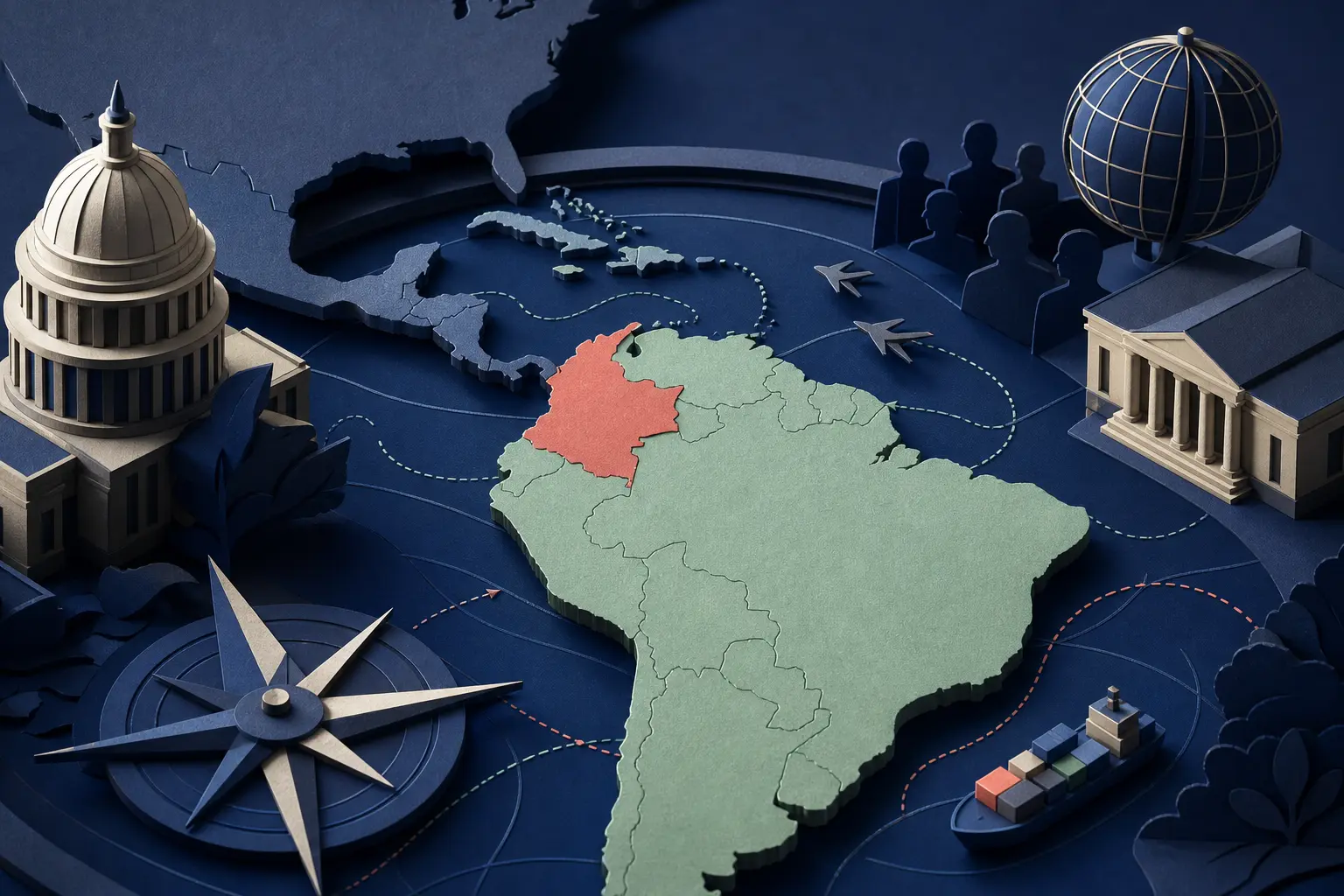
Editorial illustration for: Will the US Conduct a Military Strike on Colombian Territory by 31 December 2026?

How the contract works

A contract on this question settles at $1 if a US-initiated strike physically impacts Colombian territory by 31 December 2026, and at nothing if it does not. The price at any moment reflects what buyers and sellers currently think the chance of that happening is โ€” a contract trading at 0.30, for example, implies the market sees roughly three chances in ten, not that the event is confirmed or ruled out. The market resolves based on Polymarket's rules and credible news reporting of US military action, with settlement finalized shortly after 31 December 2026. A position bought today can be sold before that date at whatever price the market has moved to by then.
What the market thinks happens
$100
Yes28%

The event happens

Costs now
$0.28
If you put in $100
$357
No72%

The event does not happen

Costs now
$0.72
If you put in $100
$139

Probability

History starts collecting once the event is tracked

How the price has moved

The consensus price stands at 30%, with all recorded volume โ€” $1,155,561 โ€” concentrated on a single venue, Polymarket. There is no second venue to compare it against, so the figure reflects one pool of trading rather than a cross-market check. No breakdown of the price's movement over the past day or week, or its range since the market opened, is available here, so the fairest reading is simply that the current snapshot shows a market pricing escalation onto Colombian soil as a minority but far from negligible possibility.

Analysis

Context

Since mid-2025 the Trump administration has carried out repeated strikes on vessels it says are smuggling drugs, mostly in international waters off Venezuela and in the eastern Pacific and Caribbean approaches to Colombia. Those operations followed the designation of several Latin American drug-trafficking organizations as foreign terrorist groups, a legal label the administration has used to justify lethal force without going through Congress. Colombia has been pulled directly into the dispute: President Gustavo Petro has publicly condemned the boat strikes, accused Washington of extrajudicial killings, and clashed repeatedly with Trump over coca cultivation figures and US decertification of Colombia as a reliable counter-narcotics partner. This question asks about a further step: a strike that physically lands on Colombian territory itself, rather than in international waters near it. No such strike has occurred as of 8 October 2026. The resolution criteria are broad โ€” they cover drones, missiles, or air strikes hitting land, rivers, lakes, or ports, and they explicitly say that any strike the administration or Trump personally claims during the window counts, regardless of the method.
The consensus price sits at 30% across tracked venues, all of the $1,155,561 in volume concentrated on a single platform, Polymarket. A single-venue market with no competing price to arbitrage against tends to reflect one pool of opinion rather than a cross-checked consensus, which is worth keeping in mind when reading the number: there is no second venue's price to confirm or contest it. The structural reason the price sits well below even money is that the US has, so far, confined its lethal operations to the sea. Strikes on alleged drug boats in international waters are legally and politically a different category from a strike that lands on the soil of a country Washington still formally treats as a security partner, however strained that relationship has become. Crossing from sea to land would mean treating Colombia itself, not just vessels near its coast, as a target zone โ€” a move that invites sovereignty objections from Bogotรก and scrutiny from other Latin American governments watching how far the campaign extends. At the same time, several of the inputs point the other way. The administration's cartel terrorist designations do not stop at the waterline, and the legal framework used to justify the boat strikes could in principle be extended to a cross-border raid on a trafficking facility. Petro's open hostility toward Washington, including his accusations of illegal killings at sea, raises the odds that any future incident is interpreted and reported as a deliberate land strike rather than a contained maritime action. And the settlement rule that any strike Trump personally claims counts, regardless of method, means the threshold for a Yes resolution is lower than it might first appear โ€” a single announced raid, even a limited one, would be enough. The 30% price can be read as the market weighing a continuation of the status quo โ€” strikes confined to international waters โ€” more heavily than an escalation onto Colombian land, while still assigning real weight to escalation given the pace and rhetoric of the broader campaign through 2025 and into 2026.

What moves the probability

  1. Precedent from boat strikes

    The US has already struck alleged drug-trafficking vessels at sea near Colombia and Venezuela, establishing a template for using lethal force against trafficking targets without congressional approval. This pushes the probability up because the legal and political groundwork for extending strikes onto land has partly already been laid.

  2. Petro-Trump confrontation

    Public clashes between Trump and President Petro over coca cultivation, decertification, and alleged extrajudicial killings have sharpened the confrontation. Sustained hostility raises the chance that an incident involving Colombian territory is announced or framed as a deliberate strike rather than downplayed.

  3. Terrorist designation of cartels

    US designation of trafficking organizations as foreign terrorist groups gives the administration a legal rationale already used at sea. If that rationale is applied to a target physically located inside Colombia, the threshold for a Yes resolution is met almost automatically.

  4. Sovereignty and diplomatic cost

    A strike on Colombian soil, as opposed to international waters, carries a much higher diplomatic cost with a formally allied government and risks reaction from other Latin American states. This weighs against the outcome and helps explain why the price sits below even money.

  5. Broad settlement trigger

    The rule that any strike claimed by Trump or the US government counts regardless of method lowers the practical bar for a Yes outcome. A single limited or symbolic strike, if announced, would be sufficient, which pushes the probability higher than the underlying military calculus alone might suggest.

The case for

  • The US has already demonstrated willingness to use lethal force against drug-trafficking targets without congressional authorization, striking vessels in international waters near Colombia repeatedly since mid-2025.
  • Tensions between Trump and President Petro have escalated through public accusations, decertification, and disputes over coca cultivation, raising the odds of a triggering incident.
  • The resolution rule counts any strike claimed by Trump or the US government regardless of method, which means even a single limited or symbolic action inside Colombian territory before 31 December 2026 would resolve the market Yes.
  • The existing terrorist designation of cartel organizations provides a ready-made legal justification that could be extended from maritime targets to land-based ones.

The case against

  • Colombia remains a formally recognized US security partner, and a strike on its soil is a materially larger legal and diplomatic step than hitting a vessel in international waters.
  • President Petro has publicly and repeatedly resisted US pressure, and an overt land strike risks a sharper regional and domestic backlash than the boat strikes have generated so far.
  • All documented US lethal action in the region to date has been confined to the sea, with no reported land strike inside Colombia as of 8 October 2026.
  • Ground incursions, artillery, naval shelling, and intercepted munitions are explicitly excluded from the resolution criteria, narrowing the range of actions that would actually count.

What to watch

Key triggers between now and 31 December 2026 include any further US strikes on vessels or facilities tied to drug trafficking that are reported as occurring inside Colombian territorial limits rather than at sea; any public statement by Trump claiming a strike on a Colombia-based target, which would resolve the market Yes under the settlement rules regardless of scale; further deterioration in the Trump-Petro relationship, including new decertification actions or Colombian retaliatory measures; and any formal expansion of the terrorist designation framework to cover operations explicitly inside Colombian borders.

Trade this contract

Venues (1)

Open on PolymarketYes 0.29
  • gas covered
  • no trading fee

More about this event

Venues (1)

Resolution rules

Determined by
Polymarket; credible news reporting on US military action
Resolution date

This market is determined by Polymarket's resolution process together with credible news reporting on US military action. It resolves Yes if a US-initiated drone, missile, or air strike physically impacts Colombian territory โ€” including rivers, lakes, and ports, but excluding the territorial sea โ€” at any point up to 31 December 2026. Intercepted munitions, surface-to-air missile strikes, artillery, small arms fire, ground incursions, naval shelling, and cyberattacks are all excluded from counting. Separately, any strike that Donald Trump or the US government claims during this window resolves the market Yes regardless of the method used, which sets a lower practical bar than the general criteria alone.

Calculation methodology โ†’

Local context

For US audiences, this market tracks a live question about how far the Trump administration's anti-cartel military campaign will extend, and whether Congress or allied governments respond to a strike on a nominal security partner's own soil. For readers in the UK, Canada, and Australia, the relevance runs through alliance politics and precedent: a US strike inside Colombia would set a marker for how Washington treats sovereignty constraints when pursuing designated terrorist organizations, a question with echoes for other states partnered with the US on counter-narcotics or counter-terrorism operations elsewhere in Latin America and beyond.

Common questions

What exactly needs to happen for this market to resolve Yes?
A US-initiated drone, missile, or air strike must physically impact Colombian territory โ€” including rivers, lakes, or ports but not the territorial sea โ€” by 31 December 2026, as announced or credibly reported. Any strike publicly claimed by Trump or the US government during this period also qualifies, regardless of method.
Do the existing US strikes on drug boats near Colombia count?
No. Those strikes have occurred in international waters, not on Colombian territory, so they do not meet the resolution criteria as written. Only a strike that physically lands inside Colombia's borders, rivers, lakes, or ports would qualify.
What does a price of 30% actually mean?
It means the market currently estimates the chance of a US strike on Colombian soil by 31 December 2026 at roughly three in ten, based on what traders are currently paying for a contract that pays $1 if it happens and nothing if it does not. It is not a prediction from any official source, only an aggregate of market positioning.
What happens if a strike occurs but is disputed or denied by the US government?
The settlement rules rely on both the Polymarket resolution process and credible news reporting, so a strike that is widely and credibly reported as US-initiated could still resolve Yes even without an official US claim, unless the facts remain genuinely unclear, in which case resolution could be delayed pending clearer reporting.
Why is all the trading volume on one venue?
The data provided shows Polymarket as the only tracked venue for this specific question, with $1,155,561 in volume. That concentration means there is no independent price elsewhere to check this figure against.
Does a naval shelling or ground incursion count toward resolution?
No. The rules explicitly exclude artillery, small arms fire, ground incursions, naval shelling, cyberattacks, and intercepted munitions or surface-to-air missile strikes. Only drone, missile, or air strikes that physically impact Colombian land, rivers, lakes, or ports qualify, unless Trump or the US government claims a strike outright.

Related events