Menu
World

Will the US and Iran sign a final nuclear deal by 30 November 2026?

Resolution: Updated:

In short

The market treats a signed final deal by 30 November 2026 as very unlikely. There is no publicly confirmed negotiating track active right now, and the question requires a mutually signed or formally adopted instrument within a window of less than a month. That would change quickly if either government announced a resumed channel, such as Oman-mediated talks, with a concrete draft text on the table.

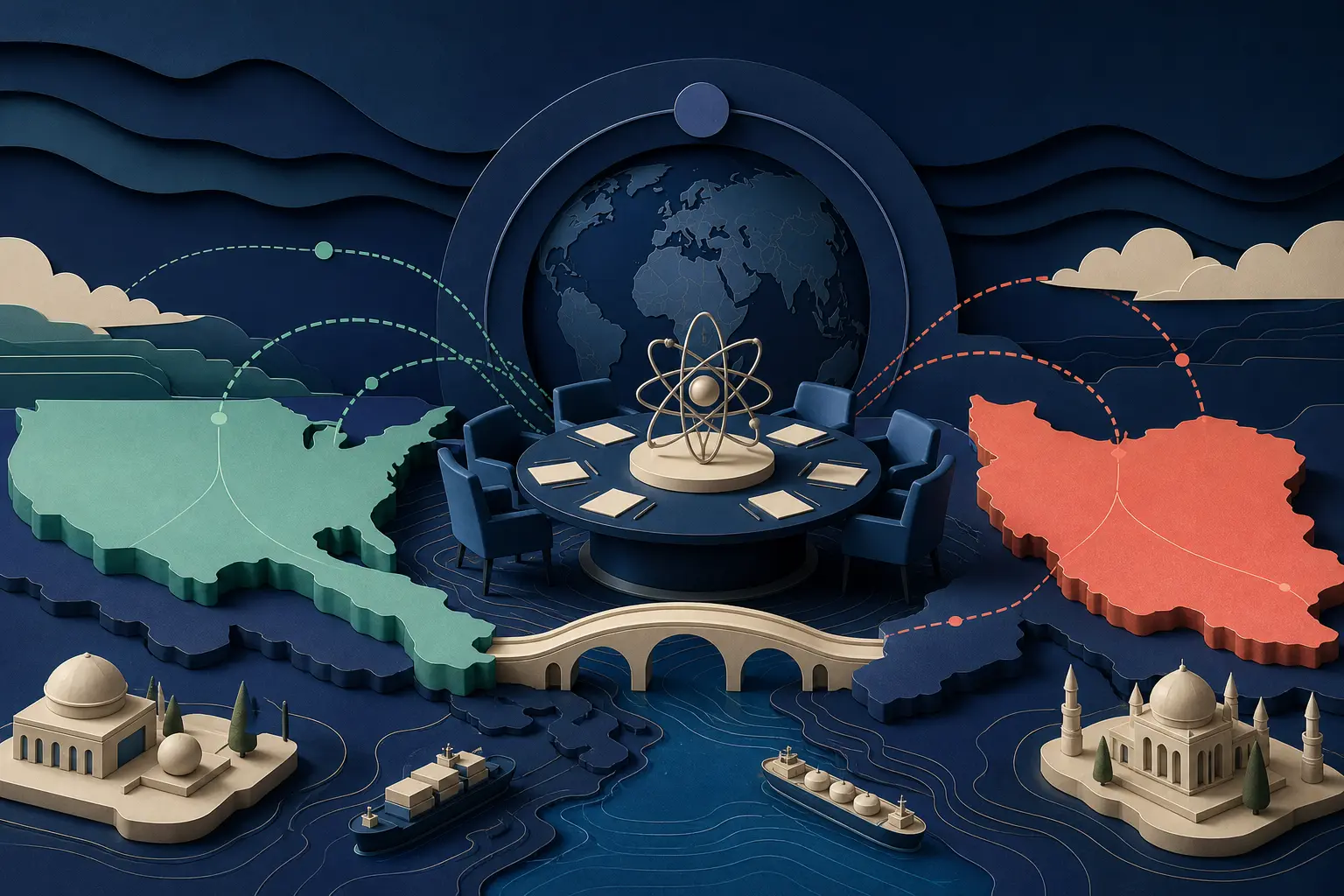
Editorial illustration for: Will the US and Iran sign a final nuclear deal by 30 November 2026?

How the contract works

A contract on this question settles at $1 if the United States and Iran have mutually signed, or both formally adopted without signature, a written diplomatic instrument that qualifies as a final nuclear deal, by 30 November 2026, 11:59 PM ET. It settles at nothing if that has not happened. The price at any moment reflects what buyers and sellers currently think the chance of that outcome is: a contract trading at 0.30, for example, implies the market sees roughly a three-in-ten chance, not that the outcome is confirmed either way. Settlement is based on official government statements from both countries and the text of any signed or adopted document; a position can generally be sold before the resolution date at whatever price the market is offering at that time.
What the market thinks happens
$100
Yes3%

The event happens

Costs now
$0.03
If you put in $100
$3,333
No97%

The event does not happen

Costs now
$0.97
If you put in $100
$103

Probability

History starts collecting once the event is tracked

How the price has moved

The consensus price stands at 7%, a level consistent with a market that sees the specific conditions for resolution โ€” a mutually signed or formally adopted final instrument within a hard deadline โ€” as currently absent rather than merely uncertain. With $268,406 in total volume concentrated on a single tracked venue, the market is thin relative to larger geopolitical questions, but the low price itself is the clearer signal: it implies traders are pricing this close to a near-certain No rather than treating it as genuinely contested. No specific news-driven swing is identified in the available data, which is itself informative: a flat, low reading suggests the market has not seen a development serious enough to move it meaningfully in either direction recently.

Analysis

Context

Iran's nuclear program has been the subject of on-and-off diplomacy for over a decade. The 2015 Joint Comprehensive Plan of Action capped Iran's enrichment in exchange for sanctions relief, but the United States withdrew from that deal in 2018 under the first Trump administration, reimposing sanctions. Indirect talks, often mediated by Oman, continued intermittently in the years that followed without producing a replacement agreement. In 2025 the situation escalated sharply. Israeli and then US strikes hit Iranian nuclear sites, including facilities at Fordow, Natanz and Isfahan, after talks stalled. Later that year, the UK, France and Germany triggered the JCPOA's snapback mechanism at the United Nations, restoring UN sanctions on Iran that had been lifted under the original deal. That sequence left both governments further from a negotiated settlement than at almost any point since 2015. As of November 2026, there is no confirmed, ongoing formal negotiation between Washington and Tehran aimed at a comprehensive replacement agreement. Any deal covered by this question would need to be a written instrument that both governments sign or formally adopt, not a verbal understanding or a partial technical arrangement.
The consensus figure sits at 7%, drawn from Polymarket, which is currently the only venue tracked for this question with meaningful activity, carrying roughly $268,406 in total volume. Because there is a single active venue rather than several pricing the same question, there is no cross-venue spread to interpret here โ€” the number is one market's current collective estimate, not an average smoothing out disagreement between platforms. A 7% price on a geopolitical event with a hard, narrow deadline typically reflects a market that sees the structural obstacles as dominant over any residual chance of a surprise. The structural obstacles are substantial. The last comprehensive US-Iran nuclear agreement, the 2015 JCPOA, took roughly two years of sustained multilateral negotiation to produce, involving the P5+1 framework rather than a bilateral US-Iran track alone. The current environment is far less conducive: 2025 saw direct military strikes on Iranian nuclear infrastructure and the reimposition of UN sanctions through the snapback mechanism triggered by the UK, France and Germany. Neither of those developments is the backdrop against which a signed final deal is typically produced within weeks. The resolution window itself is a major constraint independent of politics. The question requires a mutually signed or formally adopted instrument by 30 November 2026, which from today, 4 November 2026, leaves under four weeks. Diplomatic instruments of this scale โ€” covering enrichment limits, verification regimes, sanctions relief sequencing and often side agreements on missile or regional activity โ€” are rarely finalized that quickly even when both sides want an agreement, let alone when no confirmed formal talks are underway. What would move the price is specific and identifiable rather than speculative: a confirmed resumption of Oman- or Qatar-mediated talks with a named date for a signing ceremony, a joint statement referencing a draft text, or public remarks from the US Secretary of State or Iran's Foreign Minister indicating a document is near completion. Absent those markers, the market's low level reflects an assessment that the diplomatic machinery required for this specific outcome, within this specific window, is not currently in motion.

What moves the probability

  1. No active signing track

    There is no publicly confirmed, ongoing negotiation aimed at producing a signable final instrument. This is the dominant reason the price sits low, since a deal cannot be signed without a text being drafted and agreed first.

  2. Aftermath of 2025 strikes

    US and Israeli strikes on Fordow, Natanz and Isfahan in 2025 hardened positions on both sides and reduced the near-term appetite in Tehran for a US-brokered agreement. This pushes the probability down and makes a rapid reversal less likely within weeks.

  3. UN snapback sanctions

    The 2025 reimposition of UN sanctions through the E3-triggered snapback mechanism changed Iran's economic leverage calculation and complicated any sanctions-relief package the US might offer. This adds another layer of negotiation that a quick deal would need to resolve.

  4. Narrow resolution window

    The question requires signature or formal adoption by 30 November 2026, leaving under four weeks from today. Even a resumed negotiation with genuine momentum would likely need more time than this window allows to produce a final, mutually signed text.

  5. Domestic political constraints

    Both the US administration and Iran's leadership face domestic audiences skeptical of concessions, which historically has slowed ratification and signing even after technical agreement is reached, as seen during the original JCPOA process.

The case for

  • Oman or Qatar could announce a resumed back-channel with both governments confirming a near-final draft text before 30 November 2026.
  • Economic pressure from the 2025 UN snapback sanctions could push Tehran toward a faster settlement than domestic politics would normally allow.
  • A US administration seeking a high-profile diplomatic win could accelerate talks to produce a signing before the end of November.
  • Both sides could agree to a narrower technical instrument that still meets the resolution criteria of a formally adopted document on the nuclear program.

The case against

  • No formal negotiating channel between Washington and Tehran has been publicly confirmed as active heading into November 2026.
  • The 2025 strikes on Iranian nuclear facilities and the reimposition of UN sanctions have deepened distrust rather than built toward a signing.
  • Comprehensive nuclear agreements historically take months or years to draft and ratify, not the under-four-week window remaining before 30 November 2026.
  • Domestic political constraints in both Washington and Tehran have repeatedly stalled past rounds of indirect talks before they reached a signable text.

What to watch

The resolution date is 30 November 2026, with final settlement determined by 1 December 2026 based on official US and Iranian government statements and the text of any signed or adopted instrument. Before then, the specific things that would move this price are: any announcement of resumed Oman- or Qatar-mediated talks, statements from the US State Department or Iran's Foreign Ministry referencing a draft or near-final text, and any scheduled meeting between senior US and Iranian officials. Given the narrow window, a credible signing announcement would likely need to surface within the next two to three weeks to be reflected in a completed deal before the deadline.

Trade this contract

Venues (1)

Open on PolymarketYes 0.03
  • gas covered
  • no trading fee

More about this event

Venues (1)

Resolution rules

Determined by
Official US and Iranian government statements; text of any signed or adopted diplomatic instrument
Resolution date

This resolves Yes if the United States and Iran have mutually signed, or both formally adopted without signature, a written diplomatic instrument that constitutes a final deal on Iran's nuclear program, by 30 November 2026, 11:59 PM ET. Both governments must be committing to the same underlying instrument or substantively equivalent documents. Determination rests on official US and Iranian government statements together with the text of any signed or adopted instrument. If no such document is signed or adopted by the deadline, the question resolves No, with final settlement completed by 1 December 2026.

Calculation methodology โ†’

Local context

For US readers, this question is tied directly to American foreign policy choices: whether the administration pursues renewed sanctions relief, maintains the current sanctions posture following the 2025 snapback, or pursues further military options. For UK, Canadian, Australian and other English-speaking readers, the connection runs through oil markets and sanctions compliance โ€” a US-Iran nuclear settlement would affect Gulf security conditions and could influence oil supply risk premiums, which feed into fuel costs and inflation readings. For readers in India, which has historically balanced ties with both Iran and the US on energy and trade, a shift in US sanctions policy toward Iran would have direct implications for energy import options and compliance obligations for firms operating across both jurisdictions.

Common questions

What exactly needs to happen for this to resolve Yes?
The United States and Iran must mutually sign the same written diplomatic instrument, or substantively equivalent documents indicating acceptance of the same instrument, constituting a final deal on Iran's nuclear program, by 30 November 2026, 11:59 PM ET. If the instrument does not require signature, formal adoption by both governments without signature also qualifies.
What does the current market price actually mean?
The price reflects what buyers and sellers currently think the probability is, not a prediction handed down by an authority. A low price means the market currently assigns a low chance to a signed or formally adopted final deal happening within the stated window.
What happens if talks produce a partial or interim agreement instead of a final deal?
The resolution criteria specifically require an instrument constituting a 'final deal' on the nuclear program. A partial, interim or technical arrangement that does not rise to that description would not satisfy the Yes condition under the stated rules.
What if a deal is announced but not signed until after 30 November 2026?
The resolution deadline is strict: signature or formal adoption must occur by 30 November 2026, 11:59 PM ET. An agreement reached in principle but signed after that date would resolve the question No.
Why did US-Iran relations deteriorate so sharply in 2025?
Talks stalled and were followed by US and Israeli strikes on Iranian nuclear facilities at Fordow, Natanz and Isfahan. The UK, France and Germany then triggered the JCPOA's snapback mechanism at the UN, reimposing international sanctions on Iran that had been lifted under the 2015 deal.
Can a position on this question be closed before 30 November 2026?
Yes, in general a position can be sold on the open market before the resolution date at whatever price is being offered at that time, rather than holding until settlement.

Related events