Menu
World

Will the US End Its Naval Blockade of Iran by 15 November 2026?

Resolution: Updated:

In short

The market treats an end to the blockade within the next eleven days as unlikely. The main reason is the short resolution window combined with a high bar for a Yes: the rule requires a general cessation of blocking vessel traffic, not partial exemptions. A sudden diplomatic breakthrough with Tehran, or an explicit White House statement, is the kind of event that would move this quickly.

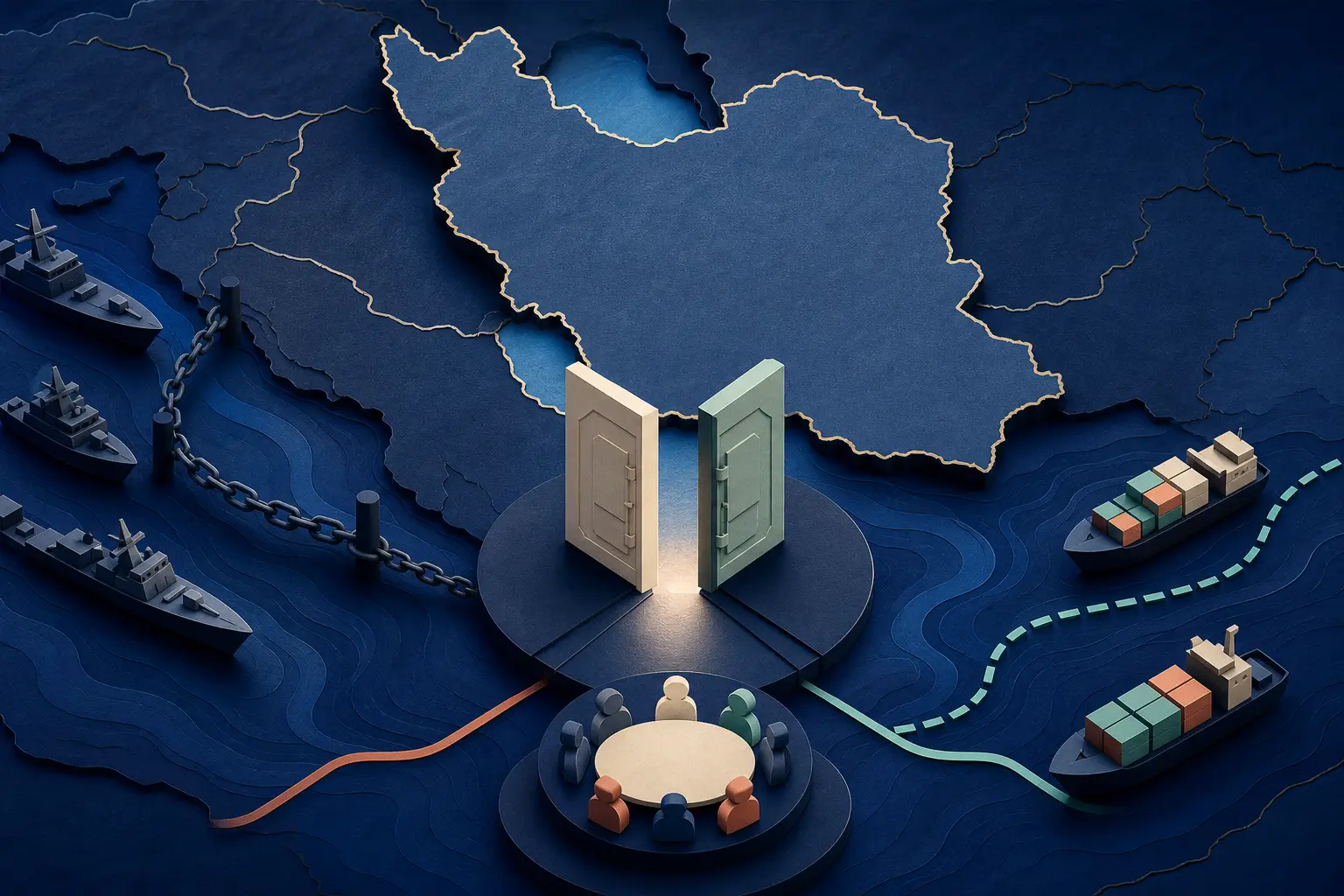
Editorial illustration for: Will the US End Its Naval Blockade of Iran by 15 November 2026?

How the contract works

This contract settles at $1 if the US government, or someone officially authorized to speak for it, publicly announces an end, termination, lifting, or suspension of the naval blockade before 15 November 2026 at 11:59 PM ET. It settles at nothing if no such announcement is made by then. The rules specifically exclude partial carve-outs, such as exemptions for particular vessels, cargo, or ports; the announcement has to reflect a general stop to blocking vessel traffic, even if other restrictions, like fees, continue. A price of 0.30 on a contract like this would mean the market sees roughly a three-in-ten chance of that announcement happening in the window; it would not mean a trader expects to profit, only that this is the collective estimate of the chance. Positions can typically be sold before the 16 November 2026 settlement date at whatever price the market has moved to by then.
What the market thinks happens
$100
Yes11%

The event happens

Costs now
$0.11
If you put in $100
$909
No89%

The event does not happen

Costs now
$0.89
If you put in $100
$112

Probability

History starts collecting once the event is tracked

How the price has moved

The contract is tracked on a single venue, Polymarket, with a consensus of 10% and $587,855 in volume. Detailed day-over-day or week-over-week price movement has not been reported, so the fairest description is that the market has settled into a stable, low view of the odds rather than reacting to a specific recent trigger. A flat, low price with no identified driver of movement is itself informative: it suggests traders see the status quo, continued blockade, as the default outcome absent a new development.

Analysis

Context

The US has maintained a naval blockade aimed at Iranian oil shipments and the customers who buy that oil, part of the Trump administration's wider pressure campaign against Tehran over its nuclear program and regional activity. The blockade works by intercepting or restricting vessels carrying Iranian crude, with the stated goal of cutting off a major source of revenue for the Iranian government. US Navy assets, the Treasury Department's sanctions-enforcement apparatus, and State Department diplomacy are the main instruments involved, while the countries buying Iranian oil, including refiners in China, are the other side of the pressure.
The consensus price sits at 10% with $587,855 in trading volume, all of it on Polymarket, the only venue currently listing this contract. A 10% probability means the market is pricing roughly a one-in-ten chance that Washington makes a qualifying announcement before the 15 November 2026 cutoff, which is now less than a fortnight away. That is a low number for a policy reversal of this scale, and it reflects the structural mismatch between the short time window and the scale of the decision being priced: ending a naval blockade tied to a multi-year pressure campaign is not a routine administrative act, it is a strategic shift that normally follows a visible diplomatic trigger, such as a nuclear agreement or a ceasefire framework, neither of which has been publicly reported as advanced. The resolution rules themselves push the price down further. A qualifying Yes requires a general cessation of blocking vessel traffic, not a narrower carve-out. Administrations under pressure often prefer incremental or case-by-case sanctions relief, for example exempting specific cargoes or ports, precisely because it is reversible and low-commitment. Under these rules, that kind of partial step would not resolve the market Yes, which removes one of the more plausible paths to a quick policy change and leaves only a full, explicit reversal as the qualifying outcome. With trading concentrated on a single venue, there is no cross-venue spread to read for disagreement, but the volume figure, just under $588,000, indicates the question has drawn real trading interest despite the low headline probability. That volume on a single-venue, low-probability contract usually reflects traders taking relatively small, directional views on a binary event with a hard deadline, rather than active two-sided disagreement about the correct level. In the absence of reported day-over-day or week-over-week price swings, the most honest read is that the market has been pricing this consistently low rather than reacting to a specific recent event.

What moves the probability

  1. Continuity of the pressure campaign

    The blockade is a central tool of the Trump administration's Iran policy, and officials have shown no public sign of reversing course. This pushes the probability down, since lifting it would represent a visible reversal of stated strategy without an obvious trigger.

  2. Diplomatic track, or lack of one

    A nuclear agreement, ceasefire arrangement, or other high-level diplomatic breakthrough with Tehran is the most plausible route to a Yes. No such development has been publicly reported as imminent, which is the single biggest reason the price sits near 10% rather than higher.

  3. Narrow resolution window

    The contract has only until 15 November 2026 to resolve Yes, giving little room for a slow-moving policy shift to complete in time. Short windows mechanically compress probability toward No for any outcome that requires a deliberate, high-level decision.

  4. High bar in the settlement rules

    Partial or vessel-specific exemptions explicitly do not count as a Yes under the rules. This closes off the more common, lower-commitment form of sanctions relief and leaves only a full, general cessation as qualifying, which is a harder and rarer kind of announcement.

The case for

  • A nuclear or regional de-escalation deal reached before 15 November 2026 could prompt the US to announce a general suspension of the blockade as part of the package.
  • The Trump administration has made abrupt, headline-driving policy reversals before, so a surprise announcement cannot be ruled out even without visible prior signaling.
  • Any statement framed as a general suspension would qualify even if some fees or administrative restrictions remained in place, which lowers the bar slightly from a full, unconditional end.

The case against

  • No publicly reported diplomatic track between Washington and Tehran currently points toward an imminent deal that would justify lifting the blockade.
  • The administration has consistently framed the blockade as part of a long-term pressure strategy rather than a temporary measure, making a reversal within days inconsistent with stated policy.
  • The rules explicitly exclude partial or vessel-specific exemptions, removing the more likely, lower-commitment path to a qualifying announcement before the 15 November 2026 deadline.

What to watch

The key date is 15 November 2026, 11:59 PM ET, the deadline for a qualifying announcement, with final settlement on 16 November 2026. Between now and then, watch for any White House, State Department, or Treasury statements on Iran sanctions policy, reports of nuclear talks or a ceasefire framework involving Tehran, and any incident at sea involving US or Iranian vessels that could force a rapid policy response in either direction.

Trade this contract

Venues (1)

Open on PolymarketYes 0.11
  • gas covered
  • no trading fee

More about this event

Venues (1)

Resolution rules

Determined by
Official statements from the United States government or authorized representatives
Resolution date

This resolves Yes if the US government or an authorized representative publicly and officially announces the end, termination, lifting, or suspension of the US naval blockade on Iranian ships and customers before 15 November 2026, 11:59 PM ET. A qualifying announcement must reflect a general cessation of blocking vessel traffic; partial or vessel-specific, cargo-specific, or port-specific exemptions do not qualify, even if some restrictions like fees remain. If no such announcement is made in time, it resolves No. The only venue currently listing this contract, Polymarket, uses this same rule set, so there is no cross-venue difference in settlement source to account for.

Calculation methodology โ†’

Local context

This is a direct US foreign-policy and military decision under the Trump administration, and it sits squarely inside the Middle East oil-security story that most readers already follow. Any change to the blockade affects how much Iranian crude reaches global markets, which feeds into oil prices that matter to US gasoline costs, UK and European energy bills, and large crude-importing economies including India. For readers in Australia and Canada the link is more indirect, running mainly through global benchmark oil prices and broader Gulf shipping risk rather than any direct exposure.

Common questions

What exactly needs to happen for this to resolve Yes?
The US government, or someone officially authorized to speak for it, must publicly announce an end, termination, lifting, or suspension of the naval blockade on Iranian ships and customers before 15 November 2026, 11:59 PM ET. The announcement has to reflect a general stop to blocking vessel traffic; narrow exemptions for specific ships, cargo, or ports do not count.
What does a 10% consensus price actually mean here
It means the market, based on current trading, estimates roughly a one-in-ten chance that a qualifying announcement happens before the deadline. It is not a prediction from any official source, just the aggregated view of people trading the contract on Polymarket.
What happens if the US announces only a partial easing, like exempting certain ports?
Under the settlement rules, that would not qualify as a Yes. The rules specifically state that limited or partial exemptions for specific vessels, cargo, or ports do not count, so the market would resolve No unless a general cessation is announced.
Why does the US maintain a naval blockade on Iran in the first place?
It is part of a broader pressure campaign tied to Iran's nuclear program and regional activity, aimed at cutting off revenue from Iranian oil exports by restricting the vessels carrying that crude and the customers buying it.
Can a position in this contract be exited before 15 November 2026?
Yes, in general contracts like this can be sold on the venue before the settlement date, at whatever price the market is showing at that time, rather than being held until resolution.

Related events