Probability
How the price has moved
Analysis
Context
What moves the probability
US mediation efforts
Washington has periodically pushed for a ceasefire framework since 2025, and any renewed, publicly reported US-brokered proposal that gets both delegations to a table would push this toward Yes. Absence of such an initiative, or its collapse, pushes the other way.
Battlefield trajectory
Neither side has signaled willingness to negotiate seriously while it believes it is gaining ground militarily. A stalemate or a costly setback for either side historically increases the odds of at least exploratory contact.
Precedent of narrow talks
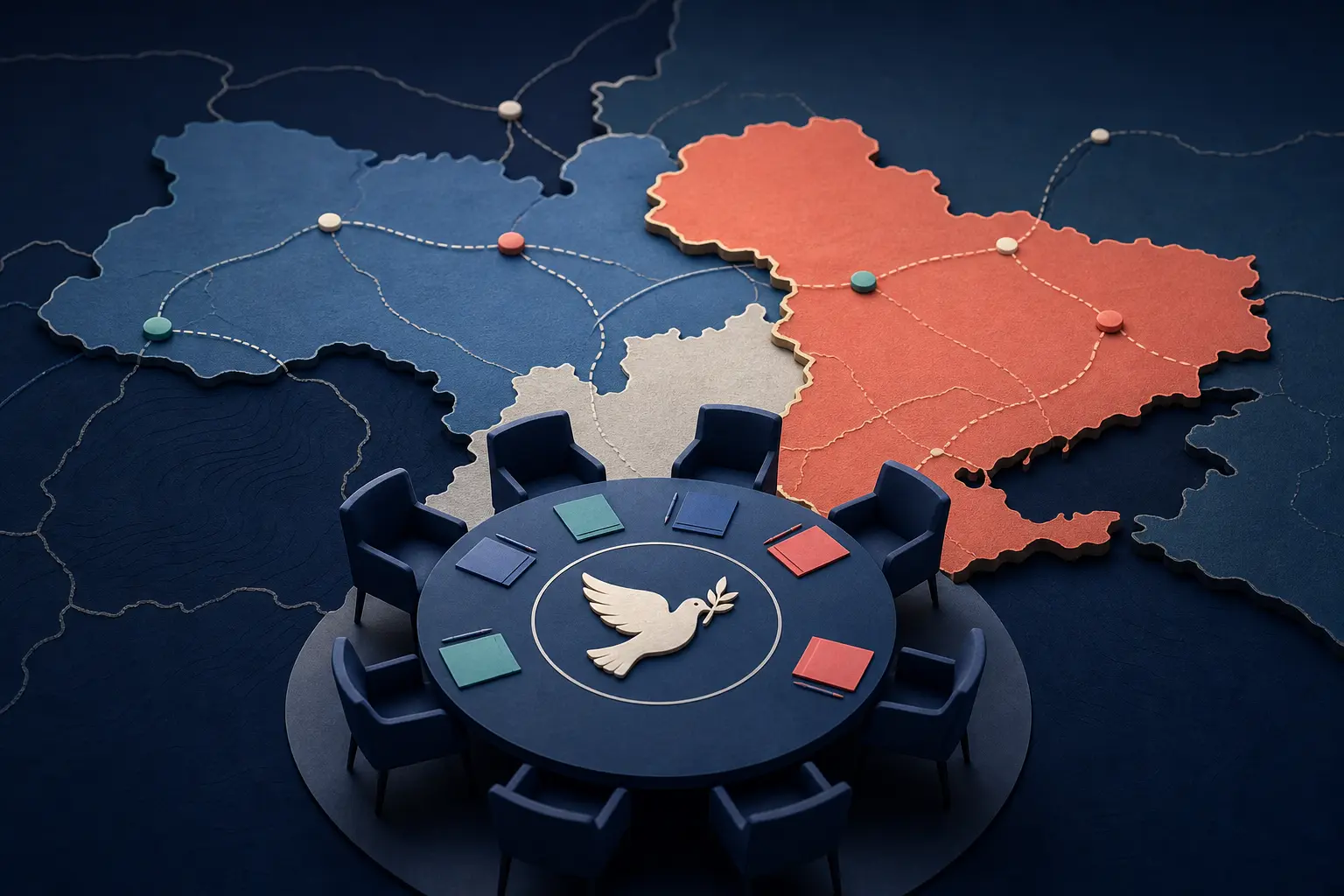
The 2025 Istanbul sessions show the two sides are capable of meeting directly, even if only on prisoner exchanges. That precedent raises the baseline chance of another meeting, though it does not guarantee one that meets this market's broader threshold on ceasefire or territory.
Domestic political constraints
Ukraine's government operates under martial law and has ruled out formally ceding occupied territory; Russia has tied any deal to recognition of its territorial claims. Both constraints reduce the odds of a substantive meeting unless one side's position shifts.
Mediator involvement
Turkey and Saudi Arabia have hosted prior contacts and remain plausible venues for any future session. Continued mediator engagement keeps the possibility of a qualifying meeting alive even when direct Moscow-Kyiv contact stalls.
The case for
- A qualifying meeting only needs to touch ceasefire, territory, or security guarantees once before 31 December 2026, not produce a finished agreement.
- Russia and Ukraine have already met directly at least once since the war's opening weeks, in Istanbul in 2025, showing the channel exists and can be reactivated.
- Sustained US and mediator interest in a ceasefire framework, if it produces even a single proposal both sides agree to discuss in person, would satisfy the resolution criteria.
- A costly military setback for either side could push it toward the table faster than current conditions suggest.
The case against
- Russia's and Ukraine's stated core conditions on territory and NATO integration have not converged in any publicly reported way through mid-2026.
- Past direct contact, including the 2025 Istanbul round, has stayed narrowly humanitarian and has not expanded into ceasefire or territorial discussion.
- Neither government has strong domestic political incentive to be seen negotiating while battlefield conditions remain contested.
- No qualifying meeting has been scheduled or announced as of the current date, meaning the outcome depends entirely on events yet to unfold.