Menu
World

Will there be a military clash between NATO and Russia by the end of 2026?

Resolution: Updated:

In short

The market treats a direct NATO-Russia clash this year as unlikely. The price has fallen sharply from where this contract was first quoted in July 2026, reflecting a run of airspace incursions and drone incidents along NATO's eastern flank that have not escalated into force-on-force engagement between the two sides. A shoot-down of a crewed Russian aircraft, a naval incident in the Baltic or Black Sea, or a breakdown in Ukraine ceasefire diplomacy are the kinds of events that would move this back up.

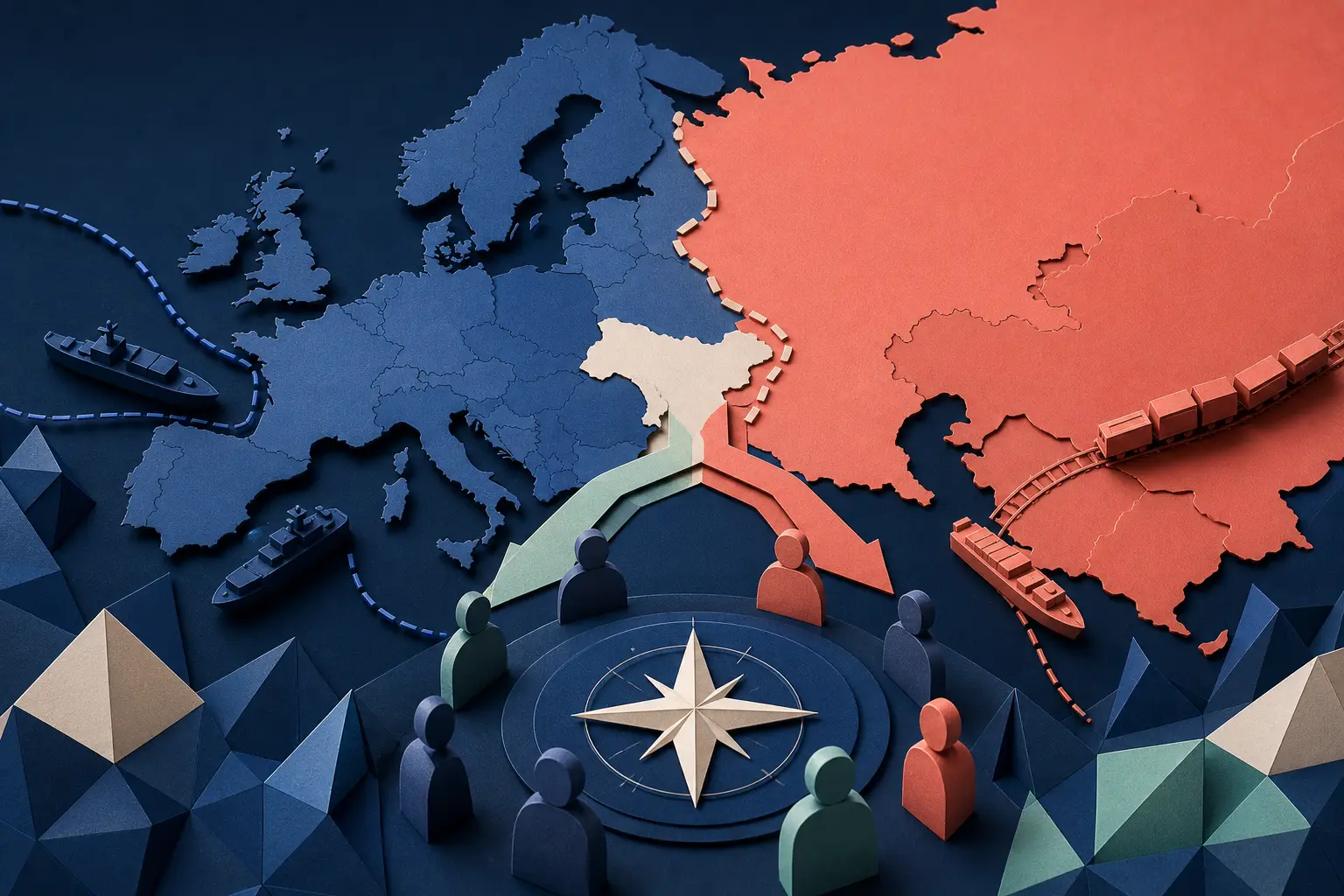
Editorial illustration for: Will there be a military clash between NATO and Russia by the end of 2026?

How the contract works

A contract on this market settles at $1 if a qualifying NATO-Russia clash occurs before 31 December 2026, 11:59 PM ET, and at nothing if it does not. The rules specify that the incident must involve an actual use of force โ€” missile strikes, artillery fire, gunfire, an intentional ramming or collision, or the shooting down of a non-munition Russian aircraft or drone such as an MQ-9, Orlan-10 or Bayraktar TB2. Airspace violations without force, warning shots, cyberattacks, and the interception of one-way attack drones aimed at a third party do not by themselves qualify. A price of, say, 0.30 would mean the market collectively judges the chance of this happening at roughly three in ten; a position in either direction can typically be sold before the 31 December 2026 settlement date at whatever price the market is quoting at that time.
What the market thinks happens
$100
Yes10%

The event happens

Costs now
$0.10
If you put in $100
$1,000
No90%

The event does not happen

Costs now
$0.90
If you put in $100
$111

Probability

History starts collecting once the event is tracked

How the price has moved

The only clear data point before the current reading is the market's opening price of 75% on 30 July 2026, a level that likely reflected acute concern around that period's airspace incidents rather than a settled consensus. The consensus has since fallen to 12%, a large repricing, but the available history logs no intermediate observations, so the reported 0.0 percentage point changes over the last 24 hours and 7 days describe a gap in the recorded price history rather than months of genuine stability. In plain terms: the market moved a great deal between its launch and now, but the granular path of that move is not captured in the data available here.

Analysis

Context

This contract asks whether NATO member forces and Russian forces will directly exchange fire or otherwise use force against each other between 2 January and 31 December 2026. It does not cover the war in Ukraine itself, since Ukraine is not a NATO member; it covers an engagement where NATO and Russian personnel or assets are both party to the use of force. That distinction matters because most of the recent friction along NATO's eastern border has involved Russian drones, not Russian-crewed aircraft or ships. Since 2025, Poland, Romania, Estonia, Latvia and Lithuania have reported repeated airspace violations by Russian drones and, on occasion, fighter jets. In September 2025 Polish and allied aircraft shot down drones that entered Polish airspace during a wave of strikes on western Ukraine, an episode that tested but did not cross the line this market tracks, because the drones were unmanned munitions rather than Russian forces engaging NATO forces directly. NATO has since expanded air-policing and naval patrols under missions such as Baltic Sentry, raising the number of close encounters even as both sides have avoided direct engagement. The market itself appeared on Polymarket on 30 July 2026, as the war in Ukraine continued alongside periodic ceasefire talks and recurring incidents on NATO's border. It has traded exclusively on that platform, with $3,734,678 in volume logged as of this reading.
The consensus probability across tracked venues sits at 12%, down from the 75% recorded when this market first appeared on 30 July 2026. That is a large repricing, and it tells a reader less about day-to-day volatility than about how the market's initial quote was set. Only one historical price point has been logged before the current reading, so the 0.0 percentage point changes recorded over the last 24 hours and 7 days reflect the gap in the observation history rather than a market that has been stable for months โ€” a flat 75% range with a single observation is a data limitation, not evidence of a long plateau. What the move from 75% to 12% does show is that whatever assumptions drove the opening price โ€” plausibly a period of acute concern after specific airspace incidents โ€” have been substantially revised downward as 2026 has unfolded without a qualifying clash. The underlying dynamics explain why. Russia's conventional forces remain heavily committed to the war in Ukraine, which limits both the capacity and the apparent appetite in Moscow for opening a second front against a nuclear alliance. NATO, for its part, has responded to repeated airspace incursions โ€” drones over Poland, Romania and the Baltic states โ€” with air-policing and shoot-downs of unmanned systems, none of which triggered this market's qualifying event because the rules explicitly separate munition drones from direct force used against Russian personnel or crewed assets. The September 2025 Polish drone incident is the clearest recent precedent: a serious incursion, a NATO response, and no clash of the kind this contract tracks. The remaining 12% priced in reflects genuine tail risk rather than a dismissal of the question. Close military contact is happening more often โ€” more intercepts, more patrols, more Baltic and Black Sea traffic โ€” and each additional contact carries some chance of miscalculation. The market's job is to weigh that rising contact frequency against the strong mutual incentive both Moscow and NATO capitals have shown, so far, to avoid a direct engagement that could trigger Article 5 consultations or wider escalation.

What moves the probability

  1. Ukraine war trajectory

    As long as Russian forces remain engaged in Ukraine, Moscow has less capacity and incentive to open a confrontation with NATO directly. A ceasefire or ceasefire collapse in Ukraine would be one of the biggest swing factors on this contract, in either direction.

  2. Eastern flank airspace incidents

    Poland, Romania, Estonia, Latvia and Lithuania have all reported Russian drone or aircraft incursions since 2025. Each incident raises the chance of a miscalculated response, though none so far has produced the direct force-on-force exchange this contract requires.

  3. NATO patrol posture

    Missions such as Baltic Sentry have increased NATO naval and air presence near Russian assets, which raises the raw number of close encounters. More contact mechanically raises the odds of an unplanned incident, even without any change in either side's intent.

  4. Mutual deterrence and Article 5

    Both Moscow and NATO capitals have strong reasons to avoid a clash that could invoke collective-defense obligations or nuclear signaling. This remains the single strongest force keeping the probability low, and it has held through multiple provocations to date.

The case for

  • A Russian crewed aircraft or a non-munition drone such as an Orlan-10 or Bayraktar TB2 is shot down by NATO forces, meeting the rules' explicit threshold for a qualifying incident.
  • An incident in the Baltic Sea or Black Sea escalates into an exchange of fire between a NATO and a Russian naval vessel.
  • Ceasefire negotiations in Ukraine collapse before 31 December 2026, intensifying Russian strikes near the Polish or Romanian border and raising the chance of spillover.
  • A miscalculation at a close-contact point, such as the Suwaล‚ki Gap or a Baltic air-policing intercept, results in a direct exchange of force.

The case against

  • Russia's military remains tied down by the war in Ukraine, limiting both capacity and apparent appetite for a second confrontation with a nuclear alliance.
  • Previous serious incidents โ€” including the September 2025 Polish drone incursion โ€” were resolved with NATO shoot-downs of unmanned systems and did not escalate into the kind of direct clash this contract requires.
  • Both NATO and Russia have consistently signaled they want to avoid an Article 5-triggering event, and that restraint has held for the duration of the Ukraine war so far.
  • With roughly seven weeks remaining in the resolution window, there is limited time left in 2026 for a new escalation pathway to open and play out.

What to watch

Watch for developments in Ukraine ceasefire negotiations, since a collapse would raise the odds of spillover onto NATO's border. Watch NATO's Baltic Sentry and eastern-flank air-policing reports for any further drone or aircraft incursions into Poland, Romania or the Baltic states, and specifically for any incident involving a crewed Russian aircraft rather than an unmanned drone. The market settles based on events through 31 December 2026, 11:59 PM ET, so the final weeks of the year carry outsized weight if tensions escalate.

Trade this contract

Venues (1)

Open on PolymarketYes 0.10
  • gas covered
  • no trading fee

More about this event

Venues (1)

Resolution rules

Determined by
Polymarket market
Resolution date

The Polymarket market resolves Yes if, between 2 January 2026 and 31 December 2026, 11:59 PM ET, there is a direct military encounter involving use of force โ€” missile strikes, artillery fire, gunfire exchange or similar โ€” between NATO member forces and Russian forces. Non-violent incidents such as airspace violations, warning shots or cyberattacks do not qualify, nor does intercepting a one-way attack drone aimed at a third party on its own. Shooting down a non-munition Russian drone or aircraft, such as an MQ-9, Orlan-10 or Bayraktar TB2, does qualify, as can an intentional physical collision involving direct weapons use. Absent a qualifying incident by the deadline, the market resolves No.

Calculation methodology โ†’

Local context

US and UK forces are core members of NATO and would be among the forces most directly exposed if a qualifying clash occurred, whether through air-policing missions over the Baltic states, naval deployments, or forces stationed in Poland and Romania. A direct NATO-Russia engagement would immediately become a US and UK foreign policy and defense-spending question, likely prompting emergency consultations, market volatility, and a reassessment of troop postures that both governments have built policy around for years.

Common questions

What exactly settles this market, and when?
It settles based on whether a direct military use of force occurs between NATO member forces and Russian forces between 2 January and 31 December 2026, 11:59 PM ET, as determined by the Polymarket market's stated rules. If no qualifying incident occurs in that window, it resolves No on 1 January 2027.
What does the current market price actually mean?
The price is the market's collective estimate of the probability, not a prediction from any single authority. A price near 12% means participants currently judge this to be a low-probability event, roughly consistent with around one chance in eight.
Would a drone shoot-down trigger a Yes resolution?
It depends on the type of drone. Shooting down a non-munition surveillance or reconnaissance drone, such as an Orlan-10 or Bayraktar TB2, qualifies under the rules. Intercepting a one-way attack munition drone aimed at a third party does not, by itself, qualify.
What happens if an incident is ambiguous or disputed?
The market's published rules set out specific qualifying categories โ€” missile strikes, artillery fire, gunfire, intentional collisions, and shoot-downs of non-munition drones โ€” and the resolution source applies those definitions to any reported incident. Non-violent events like airspace violations, warning shots or cyberattacks are explicitly excluded regardless of how serious they otherwise appear.
Has anything like this nearly happened before in this war?
Yes. In September 2025, Polish and allied aircraft shot down Russian drones that entered Polish airspace during strikes on western Ukraine, and there have been repeated airspace incursions into Baltic and Romanian territory since. None of these incidents has yet produced the direct NATO-Russia force exchange this specific contract requires.
Why did this market open at such a high price in July 2026?
The opening price of 75% likely reflected heightened concern during a period of frequent airspace incidents along NATO's eastern border. The large subsequent drop to 12% suggests that concern has eased as 2026 has passed without a qualifying clash, though the detailed price path between those two points is not recorded in available data.

Related events