Menu
World

Will Iran Lose Control of Kharg Island by 31 October 2026?

Resolution: Updated:

In short

The market treats this as all but settled against a change of control. The resolution rules demand actual occupying control of the island, not strikes, raids or naval pressure, and no reported military operation currently points toward that outcome before the window closes on 31 October 2026. A sudden amphibious or airborne operation backed by confirmed, corroborated control would be needed to shift this, and none has been reported.

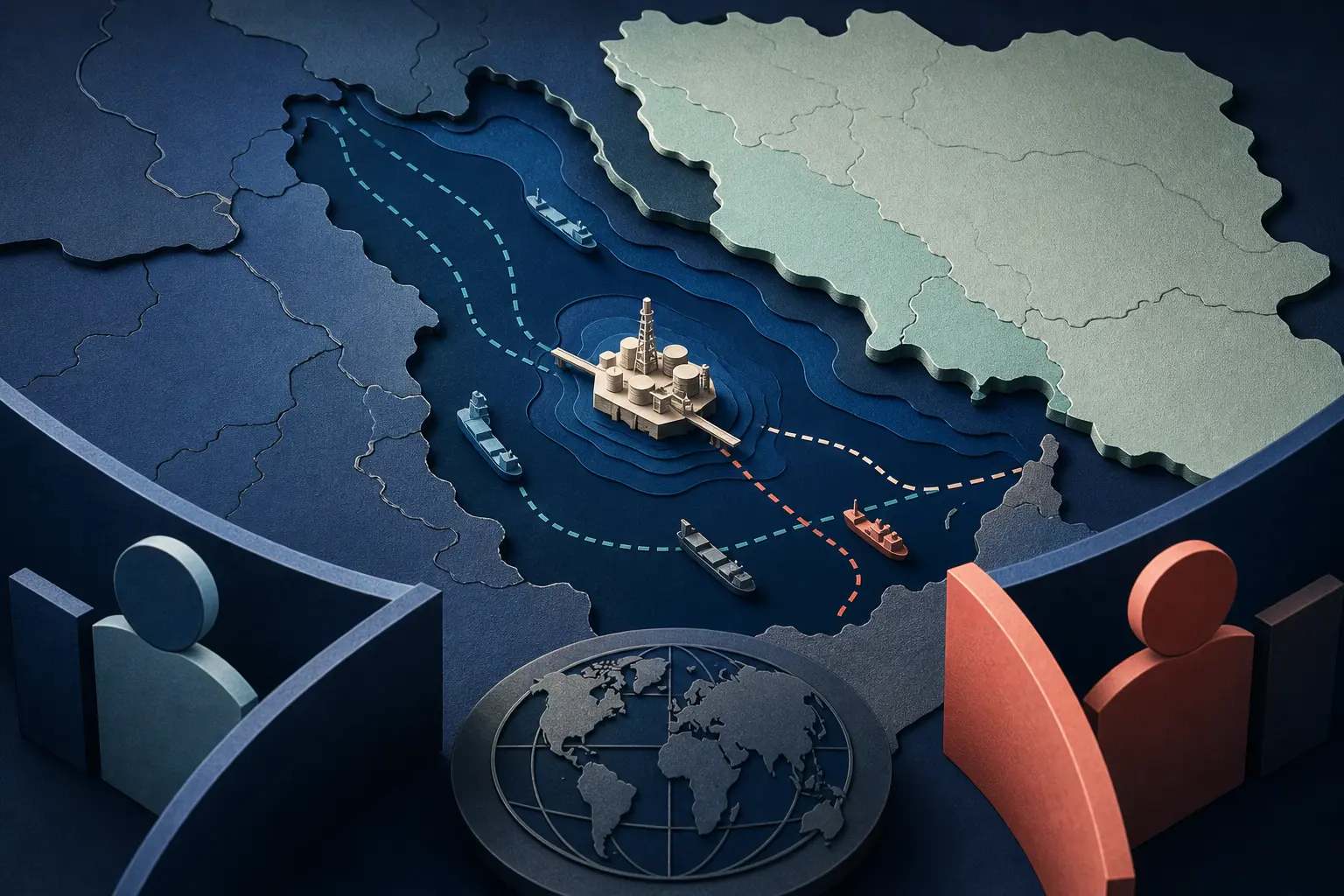
Editorial illustration for: Will Iran Lose Control of Kharg Island by 31 October 2026?

How the contract works

A contract on this market settles at $1 if Iran no longer exercises primary governmental or military control of Kharg Island by 31 October 2026, 11:59 PM ET, and at nothing if Iran still holds the island or control is contested or unclear at that point. The price at any moment reflects what buyers and sellers collectively think the chance of that occupation is; a contract priced at 0.30, for example, would mean the market sees roughly a three-in-ten chance of the island changing hands, which is not this market's price. Settlement is based on official statements from Iranian and foreign governments or militaries, checked against independent reporting and satellite imagery, and a temporary raid, bombardment, sabotage, or naval blockade does not on its own satisfy the bar for a Yes. A position in this market can generally be sold before the 31 October resolution date at whatever price the market is offering at that time.
What the market thinks happens
$100
Yes1%

The event happens

Costs now
$0.01
If you put in $100
$10,000
No99%

The event does not happen

Costs now
$0.99
If you put in $100
$101

Probability

History starts collecting once the event is tracked

How the price has moved

The market has settled near the bottom of the scale, around 1%, on a single listed venue with total volume of $318,756. There is no second venue to compare it against, so the figure reflects one pool of trading rather than a cross-platform consensus. A price pinned near the floor on a question with a hard, territorial-control resolution bar is consistent with traders judging an occupation of Kharg Island within the remaining window as very unlikely rather than genuinely contested.

Analysis

Context

Kharg Island sits in the Persian Gulf roughly 25 km off Iran's southern coast and functions as the country's principal crude oil export terminal, loading the large majority of the oil Iran ships abroad, most of it to China. Control of the island has direct bearing on Iran's ability to generate oil revenue and on global crude supply, which is why any military threat to it draws attention well beyond Iran's borders. The island has been a target before: during the Iran-Iraq war in the 1980s, Iraqi aircraft struck Kharg's storage and loading facilities repeatedly, yet Iraq never landed forces there or took the island. Iran has also faced renewed military pressure from Israel and, at times, the United States in 2025 and into 2026, with strikes on Iranian military and nuclear-linked sites, but none of the reported action has involved an attempt to physically occupy Iranian territory such as Kharg. The question here is narrow: does a foreign state, occupying force, or internationally backed authority establish actual control of the island by 31 October 2026, as judged from official government and military statements corroborated by independent reporting and satellite or open-source intelligence.
Across the one venue currently listing this market, Polymarket, the price sits at the low end of the scale, around 1%, on $318,756 of trading volume. A single-venue listing with no meaningful cross-venue spread to report means there is no disagreement between platforms to analyze here; the number reflects one pool of traders converging on a near-zero outcome rather than a contested consensus. That low, apparently stable reading is itself informative: when a market this specific sits close to the floor rather than drifting, it usually means participants see the resolution bar as very hard to clear in the time available, not that they expect a close contest that could still swing either way. The resolution language does heavy lifting here. It requires "actual control" established by an occupying force or internationally backed authority, explicitly excluding raids, bombardment, sabotage, and naval presence, however intense. That is a territorial-control standard, closer to the bar for an invasion succeeding than for a strike campaign causing damage. Iran-Iraq war history offers a direct precedent: Kharg's oil facilities were bombed on numerous occasions in the 1980s without Iraqi forces ever landing on or holding the island, illustrating how far sustained aerial pressure is from physical occupation. Timing compounds the difficulty of a Yes outcome. As of 8 October 2026, the window to 31 October 2026 is roughly three weeks, which is a short runway for any state to mount, execute, and hold an amphibious or airborne operation against an island Iran has strong incentive to defend given its economic importance. No publicly reported troop buildup, naval task force movement, or stated intention to occupy Kharg specifically has been tied to this period, which is consistent with the market's near-zero pricing rather than a sign of complacency.

What moves the probability

  1. Resolution bar is territorial, not military

    The rules exclude raids, bombardment, sabotage and naval presence from counting as loss of control, requiring instead that an occupying force or internationally backed authority hold the island. This sets a high threshold that pushes the probability down regardless of how intense any strikes might be.

  2. Short remaining window

    With roughly three weeks left between today and 31 October 2026, there is limited time for any state to plan and execute an occupation, which weighs against a Yes resolution.

  3. No reported occupation force

    No publicly reported troop buildup, naval task force, or stated military objective targeting Kharg specifically has surfaced, which is the main reason the price sits near the floor rather than drifting upward.

  4. Historical precedent of no capture

    During the Iran-Iraq war, Kharg Island endured repeated bombing without ever being captured, a precedent that supports skepticism that strikes alone translate into occupation.

  5. Global oil-supply stakes raise the political cost

    Because Kharg handles the bulk of Iran's crude exports, any move to occupy it would carry major implications for global oil supply, which raises the political and military cost of attempting it and makes states more cautious about trying.

The case for

  • A foreign military would need to land forces on Kharg Island and establish and hold actual control, confirmed by official statements and corroborated by independent reporting and satellite imagery, all before 31 October 2026.
  • This would likely require a rapid escalation beyond the strikes and naval activity reported through 2025 and into 2026, moving toward a direct invasion or an internationally backed intervention force.
  • Such an operation would need to begin very soon given the roughly three-week window remaining from 8 October 2026.

The case against

  • No publicly reported troop buildup, amphibious task force, or stated military objective currently points toward an occupation of Kharg Island specifically.
  • The resolution rules exclude raids, bombardment, sabotage and naval presence, meaning intense military pressure alone cannot produce a Yes without actual territorial control changing hands.
  • During the Iran-Iraq war, Kharg Island was bombed extensively over years without being captured, illustrating how difficult occupation has historically been even under sustained attack.
  • The short time remaining before the 31 October 2026 deadline leaves little room for a full occupation to be planned, executed and confirmed by independent sources.

What to watch

The resolution date is 31 October 2026 at 11:59 PM ET, with the overall market resolving on 1 November 2026 based on official government and military statements corroborated by independent reporting and satellite or open-source intelligence. Between now and then, the things that would actually move this are any reported buildup of naval or airborne forces near Kharg, any official Iranian or foreign government statement about control of the island, and any corroborated satellite imagery showing a change in who physically controls the terminal. Broader developments in the Israel-Iran and US-Iran confrontation, including any ceasefire breakdown or new strikes, are also worth tracking since they set the backdrop against which an actual occupation attempt would have to occur.

Trade this contract

Venues (1)

Open on PolymarketYes 0.01
  • gas covered
  • no trading fee

More about this event

Venues (1)

Resolution rules

Determined by
Official statements from Iranian and foreign governments/militaries, corroborated by independent reporting and satellite/open-source intelligence.
Resolution date

This market resolves Yes if Iran no longer holds primary governmental or military control over Kharg Island by 31 October 2026, 11:59 PM ET, with another state, occupying force, or internationally backed authority shown to have established actual control. The determination relies on official statements from Iranian and foreign governments or militaries, corroborated by independent reporting and satellite or open-source intelligence. Raids, bombardment, sabotage, naval presence, or unverified claims of lost control do not qualify on their own, and any contested or unclear situation at the deadline resolves No.

Calculation methodology โ†’

Local context

Kharg Island handles the large majority of Iran's crude oil exports, so any disruption to control of the island would be a global oil-supply story, not just a regional one. A change in who controls Kharg could affect crude prices that feed into gasoline costs across the US, UK, Canada and Australia, and it would almost certainly become a flashpoint in US foreign policy debates over Iran sanctions and military posture in the Gulf. For readers who follow US-Iran relations or global energy markets, this is one of the more consequential, if currently unlikely, geopolitical triggers on the board.

Common questions

What exactly settles this market, and when
The market resolves based on official statements from Iranian and foreign governments or militaries, corroborated by independent reporting and satellite or open-source intelligence, judged against the state of control on 31 October 2026, 11:59 PM ET. Overall resolution is dated 1 November 2026.
What does a market price of 1% actually mean
It means that, based on current trading, participants collectively see roughly a 1-in-100 chance that Iran loses primary control of Kharg Island to another state or occupying force before the deadline. It is not a prediction from any single analyst, but an aggregate of what traders are willing to pay for the contract.
Does a missile strike or naval blockade on Kharg count as losing control
No. The rules explicitly state that temporary raids, bombardment, sabotage, naval presence, or claims of lost control do not qualify on their own. Only an occupying force or internationally backed authority establishing actual governmental or military control counts.
What happens if control of the island is unclear or disputed on 31 October 2026
The rules specify that if control is contested, unclear, or not sufficiently established by the resolution date, the market resolves No. Ambiguity defaults against a Yes outcome rather than triggering a delay.
Why does Kharg Island matter beyond Iran
Kharg is Iran's main oil export terminal, loading most of the crude Iran ships abroad, so any disruption to Iranian control would have implications for global oil supply and for the oil-importing economies that are sensitive to Gulf-region instability.
Has Kharg Island ever faced this kind of threat before
Yes. During the Iran-Iraq war in the 1980s, Iraqi forces struck Kharg's oil facilities repeatedly over several years without ever landing troops or capturing the island, a precedent often cited when weighing how far military pressure is from actual occupation.

Related events