Menu
World

Will China and Taiwan have a military clash before 2027?

Resolution: Updated:

In short

The market treats an actual military clash between China and Taiwan before 2027 as unlikely. The main reason is that decades of coercive pressure from Beijing โ€” naval patrols, air incursions, missile tests โ€” have never crossed into an armed exchange with Taiwanese forces, and the resolution window is short. A move toward Yes would need a real kinetic event: gunfire, a strike, or a deliberate ramming causing serious damage, not another drill or overflight.

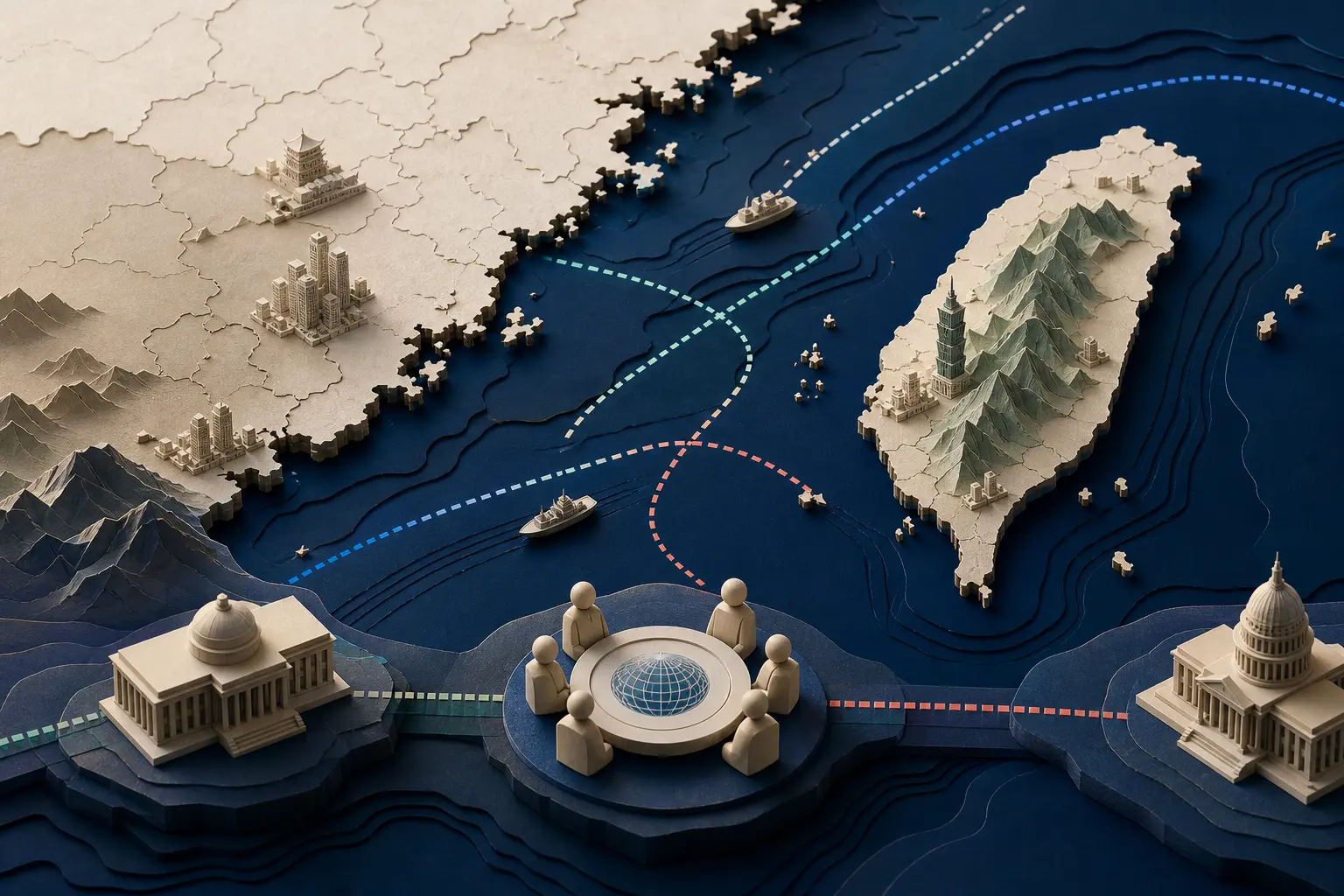
Editorial illustration for: Will China and Taiwan have a military clash before 2027?

How the contract works

A contract on this question settles at $1 if a qualifying military clash occurs between the specified dates, and at nothing if it does not. The market price at any moment reflects what traders currently think the chance of that is โ€” a price of 0.30, for example, would imply the market sees roughly a three-in-ten chance, though that is a hypothetical, not this market's actual level. The event settles based on a consensus of credible reporting, including Reuters, AP, and official statements from Taipei and Beijing, with the deadline set at 31 December 2026, 11:59 PM ET. A position bought today can be sold before that date at whatever price the market has moved to, without waiting for settlement.
What the market thinks happens
$100
Yes8%

The event happens

Costs now
$0.08
If you put in $100
$1,250
No92%

The event does not happen

Costs now
$0.92
If you put in $100
$109

Probability

History starts collecting once the event is tracked

How the price has moved

The market consensus sits at a low 8% across the tracked venue, reflecting a year-plus of PLA activity around Taiwan that has repeatedly stopped short of an actual armed clash. With only Polymarket carrying meaningful volume at $3,186,582, there is no cross-venue spread to point to, and the level itself signals that traders see this as a low-probability tail risk rather than an emerging crisis. The reading is consistent with the absence of any single reported trigger โ€” no incident in the current window has come close to the settlement threshold of direct fire, a qualifying ramming, or a similar armed encounter.

Analysis

Context

Cross-strait tension between the People's Republic of China and Taiwan has been rising for years, driven by Beijing's stated goal of eventual unification and its refusal to rule out force. Since Taiwan's Democratic Progressive Party, first under Tsai Ing-wen and now under President Lai Ching-te, has held the presidency, Beijing has responded with large-scale military exercises, near-daily incursions into Taiwan's air defense identification zone, and coast guard patrols near outlying islands like Kinmen. None of this has yet involved an actual exchange of fire between the two sides' armed forces. The United States remains Taiwan's principal security backer under the Taiwan Relations Act, supplying arms and maintaining a policy of strategic ambiguity about direct defense. Washington's posture, alongside Japan's growing concern about a contingency near its southern islands, means any clash would immediately become a wider international crisis, not a localized dispute. This market asks a narrow, factual question: does a violent military encounter โ€” not a drill, not a warning shot, not a passage through airspace โ€” occur between 11 November 2025 and 31 December 2026. Coast guard vessels count on the Chinese side but not the Taiwanese side, and a ramming has to cause significant damage to qualify.
Across the tracked venue, Polymarket, the market-implied probability sits at 8%, on total volume of $3,186,582. A single-digit consensus after several months of trading indicates the market views a violent clash as a distinctly low-probability tail event rather than a live near-term risk, even amid frequent Chinese military activity around Taiwan. The base rate matters here. China has conducted large-scale exercises โ€” including simulated blockades โ€” multiple times since 2022, and PLA aircraft cross the median line of the Taiwan Strait on most days. None of this activity has produced an armed exchange, because Beijing's strategy has consistently favored pressure short of war: economic coercion, diplomatic isolation, and shows of force calibrated to avoid triggering a US or Japanese military response. That pattern is the strongest argument for the low price. A clash would represent a sharp break from years of calibrated behavior, not an escalation of a trend already under way. The resolution window itself narrows the odds further. The clock runs only from 11 November 2025 to 31 December 2026, a little over a year, and excludes near-misses โ€” warning shots, missiles landing in open water, airspace transits โ€” that would otherwise dominate headlines. Only a direct engagement, a deliberate ramming with real damage, or an actual exchange of fire counts. Given how carefully both Beijing and Taipei have avoided that threshold even during the tensest moments of the last four years, including after then-House Speaker Nancy Pelosi's 2022 visit to Taipei, the market's low reading is consistent with historical precedent rather than complacency. What could move the price is a discrete trigger: a major political statement from Lai Ching-te on independence, a large US arms package, an accident at sea escalating into confrontation, or a shift in China's domestic political calendar around the 2027 PLA centennial. Absent such a trigger, the market has little reason to move far from its current low reading.

What moves the probability

  1. PLA gray-zone activity

    China conducts near-daily air and naval incursions around Taiwan, but these are designed to pressure without triggering armed response. This keeps tension visibly high while pushing the probability of an actual clash down, since Beijing has shown a consistent preference for coercion over confrontation.

  2. US security commitments

    Washington's arms sales and its ambiguous defense posture raise the cost of any Chinese use of force, since a clash would likely draw in US naval assets. This is a significant downward pressure on the probability, as it changes Beijing's calculus toward avoiding a confrontation that could escalate regionally.

  3. Taiwan's political calendar

    President Lai Ching-te's statements on sovereignty and any legislative moves on defense spending are watched closely in Beijing. A sharp rhetorical shift from Taipei could raise short-term risk, though no major electoral trigger falls within the current resolution window.

  4. Coast guard and ramming incidents

    Because China's coast guard counts as military under these rules while Taiwan's does not, an incident near Kinmen or the median line involving a Chinese vessel and significant damage could resolve this market Yes without any wider war. This is the most plausible near-term path to a Yes outcome.

  5. China's domestic timeline

    Xi Jinping has spoken of unification aspirations tied loosely to longer-term dates, including references to PLA modernization goals around 2027. This is a slow-moving structural factor rather than a near-term trigger within the current window.

The case for

  • A Chinese coast guard vessel would need to ram a Taiwanese naval or coast guard vessel and cause significant damage, which the rules count as qualifying even without an exchange of fire.
  • An accidental or deliberate exchange of gunfire or missile fire between PLA and Taiwanese forces would need to occur, not merely a warning shot or a missile passing through airspace.
  • A major escalation, such as a formal declaration of Taiwanese independence or a large-scale Chinese blockade attempt, would need to unfold before 31 December 2026, prompting a direct military response from Taipei.
  • Any such event would need to be confirmed by credible reporting from outlets like Reuters or AP, or acknowledged by official statements from Beijing or Taipei.

The case against

  • No qualifying clash has occurred in the more than three years of heightened PLA activity around Taiwan since August 2022, suggesting a strong pattern of pressure without direct engagement.
  • Both Beijing and Washington have strong incentives to avoid a war that would disrupt global semiconductor supply chains centered on Taiwan's TSMC and risk direct US military involvement.
  • The resolution window excludes near-miss incidents like warning shots and missile overflights, which have occurred without resolving Yes and are the more common form of escalation.
  • China's stated preference for economic and diplomatic coercion over military force, absent a specific political trigger like an independence declaration, points toward continued avoidance of a violent encounter.

What to watch

Key dates ahead include Taiwan's National Day on 10 October 2026, when President Lai typically delivers a closely watched address on sovereignty, and the anniversary period around China's largest annual military exercises, which have historically clustered near Taiwanese political milestones. Any new US arms sale announcement, a shift in Chinese Communist Party messaging tied to PLA modernization goals near 2027, and incident reports involving China's coast guard near Kinmen or the median line are the most direct near-term catalysts. Reporting from Reuters, AP, and official statements from Taipei and Beijing will be the primary sources determining whether any incident meets the settlement threshold.

Trade this contract

Venues (1)

Open on PolymarketYes 0.08
  • gas covered
  • no trading fee

More about this event

Venues (1)

Resolution rules

Determined by
Consensus of credible news reporting (e.g. Reuters, AP, Taiwan and China official statements)
Resolution date

This market resolves Yes if credible reporting โ€” from outlets such as Reuters and AP, or official statements from Taipei or Beijing โ€” confirms a military encounter involving actual use of force between Chinese and Taiwanese armed forces between 11 November 2025 and 31 December 2026, 11:59 PM ET. Qualifying events include missile strikes, artillery fire, gunfire exchange, direct military engagement, or a deliberate ramming causing significant damage or sinking. China's coast guard counts as a military force for this purpose; Taiwan's Coast Guard Administration does not. Warning shots, missiles landing in open water, or aircraft transiting airspace without force do not qualify, and the market resolves No if no such event is reported by the deadline.

Calculation methodology โ†’

Local context

A military clash in the Taiwan Strait would not stay a regional story. It would test US treaty commitments under the Taiwan Relations Act, could draw American naval forces into direct contact with China's, and would disrupt the semiconductor supply chain anchored by Taiwan's TSMC, on which US, European, and Asian technology and auto industries depend. For readers following Fed policy and equity markets, a clash of this kind would be one of the sharpest global-market shocks currently on the geopolitical radar, well beyond the scope of routine cross-strait tension.

Common questions

What exactly settles this market, and when?
It settles based on a consensus of credible reporting โ€” Reuters, AP, and official Taiwanese or Chinese statements โ€” on whether a qualifying military clash occurred between 11 November 2025 and 31 December 2026, 11:59 PM ET. If no such event is reported by the deadline, it resolves No.
What does the current market price actually mean?
The price is the market's collective estimate of the probability of a clash, expressed as a number between 0 and 1. It is not a prediction from any single analyst or institution, but the aggregate view of everyone currently trading the contract.
Do Chinese warning shots or drills count as a clash?
No. The rules explicitly exclude warning shots and missiles landing in water or passing through airspace. Only direct engagement โ€” missile strikes, artillery fire, gunfire exchange, or a ramming causing significant damage โ€” qualifies.
Does China's coast guard count as a military force here?
Yes, for China. An incident involving a Chinese coast guard vessel and a Taiwanese military vessel can qualify. Taiwan's Coast Guard Administration, however, does not count as a military force under these rules.
What happens if a clash is disputed or reporting is unclear?
The rules rely on a consensus of credible reporting rather than a single source, so an ambiguous or disputed incident would need corroboration from multiple outlets or an official statement before the market resolves Yes.
Has anything like this happened before?
No qualifying armed clash has occurred despite years of PLA exercises, incursions, and coast guard patrols since at least 2022, including after high-profile events like the 2022 visit to Taipei by then-US House Speaker Nancy Pelosi.

Related prediction events

Tokenized stocks

Market-implied probabilities that provide context for this assetโ€™s catalysts.

Related events