Menu
World

Will CATL be removed from the Pentagon's Chinese military companies list by mid-2027?

Resolution: Updated:

In short

The market treats removal as unlikely. The main reason is timing: CATL was only added to the list on 8 June 2026, and the Pentagon has no record of fast, voluntary delistings outside of a court order. A successful lawsuit, a DoD administrative review finding no military ties, or a US-China trade deal that addresses the list would change that.

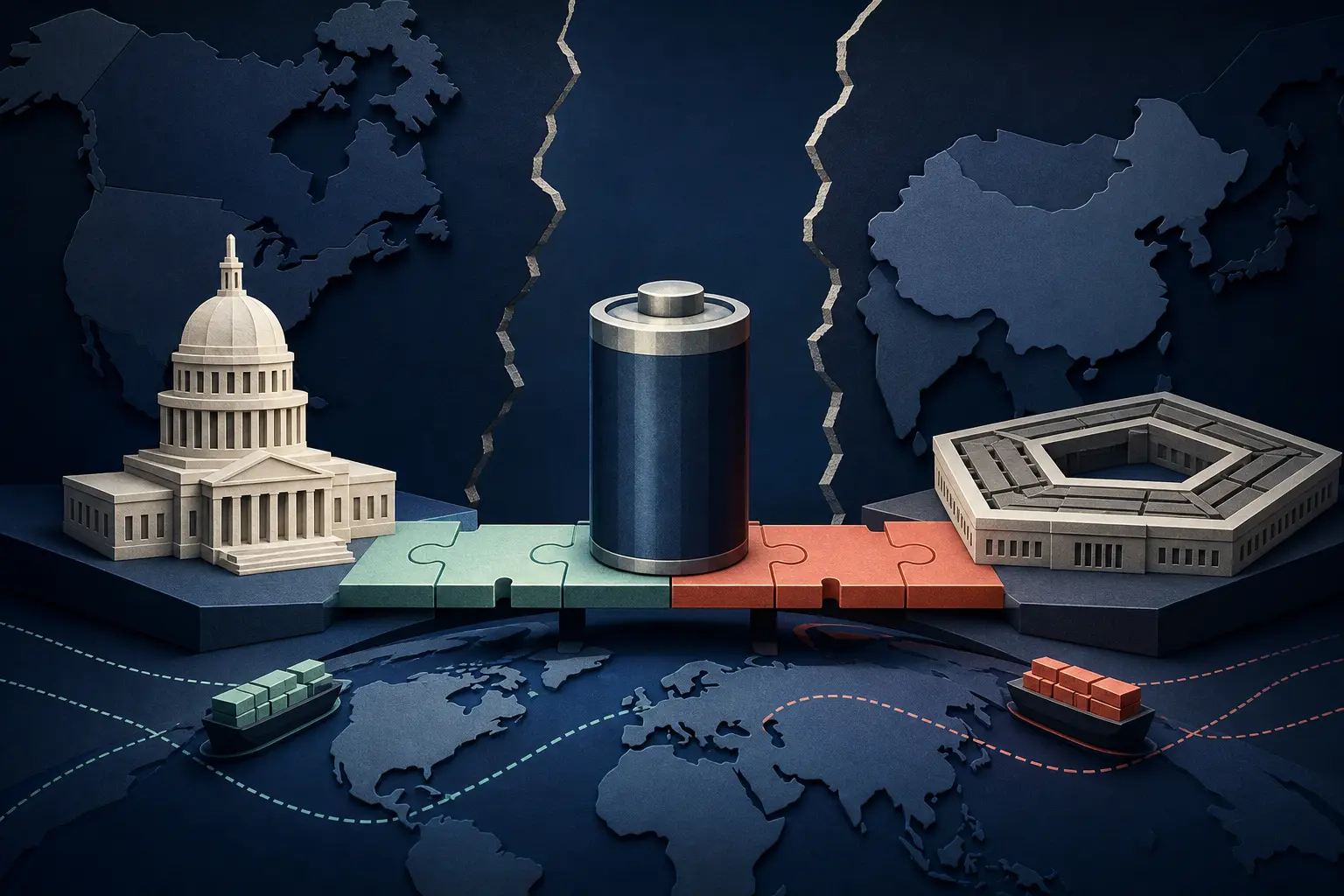
Editorial illustration for: Will CATL be removed from the Pentagon's Chinese military companies list by mid-2027?

How the contract works

This contract settles based on whether CATL, as named on the 8 June 2026 Section 1260H list, is fully removed from a later official DoD Section 1260H list by 30 June 2027, 11:59 PM ET, as shown in a Federal Register notice or official DoD announcement. Removing only a CATL subsidiary or affiliate while CATL itself stays listed does not count as removal. A contract on this question settles at $1 if CATL is fully delisted by that date and at nothing if it is not. The price at any time simply reflects what buyers and sellers currently think the chance is; a price of 0.30, for example, would mean the market sees roughly a three-in-ten chance of removal, not that removal is three-tenths complete. Positions can typically be sold before the settlement date at whatever price the market is quoting at that time.
What the market thinks happens
$100
Yes20%

The event happens

Costs now
$0.20
If you put in $100
$500
No80%

The event does not happen

Costs now
$0.80
If you put in $100
$125

Probability

History starts collecting once the event is tracked

How the price has moved

The available data shows a consensus of 27% built from a single venue, Polymarket, with $123,530 in total trading volume. There is no second venue to compare it against, so the figure reflects one pool of market participants pricing the odds of a procedural, legally contested outcome rather than an average across independently priced markets. A 27% reading is consistent with a market that sees removal as a minority outcome within the available window, but plausible given precedent like the 2021 Xiaomi case.

Analysis

Context

The US Department of Defense keeps a list, required under Section 1260H of the annual defense authorization law, of Chinese companies it judges to operate in or support China's military-civil fusion system. Firms named on the list are not sanctioned outright, but US defense contractors and, increasingly, other federal programs are restricted from doing business with them, and the designation carries reputational weight with private partners. CATL, the world's largest maker of electric-vehicle batteries, was added to the list published on 8 June 2026. CATL has disputed the basis for its inclusion, arguing it is a private commercial company with no meaningful military ties. Companies named on the 1260H list have a formal avenue to petition the Pentagon for removal, and a small number have succeeded, most notably Xiaomi, which sued the Department of Defense in 2021 and won a federal court order forcing its removal within months. Most other listed firms have stayed on for years with no removal. The stakes for CATL are commercial as well as political. Its batteries, including licensed LFP technology, run through supply chains used by Ford, Tesla and other automakers operating in the United States, which gives those companies and allied lobbyists a direct interest in how this is resolved.
Consensus across tracked venues sits at 27%, built from a single active venue, Polymarket, with $123,530 in trading volume. A single-venue market means there is no cross-venue spread to check against, which is a useful caveat on its own: the 27% reading reflects one pool of participants' judgment rather than an average smoothed across several independent markets, so it carries less of the confidence that comes from agreement between competing venues. The core question is procedural, and the procedure runs slowly. DoD's 1260H list is reviewed roughly annually, and companies have stayed listed for years after their initial inclusion with no administrative reversal. The one clear precedent for a fast removal is Xiaomi's 2021 case, where a federal judge sided with the company and forced its removal from a similar Pentagon list within months of the company filing suit. That case shows removal is possible on this kind of timeline, but it required active litigation and a court ruling, not an unprompted DoD reconsideration. As of the window covered here, no comparable lawsuit from CATL has been reported. Timing works against a Yes outcome. CATL was only added on 8 June 2026, leaving roughly thirteen months to the 30 June 2027 settlement deadline. That is a tight window for a legal challenge to be filed, litigated and decided, or for an administrative review to run its course and produce a reversal, especially given how contentious US-China trade and technology policy has been around EV supply chains and battery technology specifically. Counterweighing that is commercial pressure. CATL's batteries are embedded in supply chains used by major US and global automakers, giving those companies a direct incentive to push for a resolution, whether through lobbying, trade negotiation, or support for a legal challenge. If a broader US-China trade understanding touches on entity-list and military-company designations before mid-2027, that could move the odds of removal faster than the historical DoD review pace would suggest on its own.

What moves the probability

  1. Litigation precedent

    Xiaomi won removal from a comparable Pentagon list in 2021 by suing in federal court, showing fast delisting is possible but historically required active litigation rather than a voluntary DoD reversal. No public CATL lawsuit has been reported, which weighs against a Yes outcome within this timeframe.

  2. Automaker supply-chain pressure

    Ford, Tesla and other automakers use CATL battery technology, giving them a commercial incentive to push for the designation to be resolved. This pressure could accelerate a review but has not yet produced a public administrative outcome.

  3. US-China trade diplomacy

    Ongoing friction over EV supply chains and battery technology makes a unilateral DoD removal of a major Chinese battery maker diplomatically harder in the near term. A broader trade agreement touching entity-list policy could shift this, but none has been reported as resolving the 1260H list specifically.

  4. Short time window

    CATL was added on 8 June 2026, leaving about thirteen months before the 30 June 2027 deadline. Past 1260H removals, outside of court-ordered cases, have generally taken longer than that, which weighs against removal in time.

  5. Annual DoD review cycle

    The Section 1260H list is typically updated on an annual cycle tied to the defense authorization process. The next scheduled update after June 2026 is the main administrative opportunity for CATL's name to be dropped absent a court order.

The case for

  • CATL could file and win a legal challenge similar to Xiaomi's 2021 case, resulting in a court-ordered removal before 30 June 2027.
  • A DoD administrative review could conclude CATL lacks the military-civil fusion ties the designation requires and remove it in a subsequent 1260H update.
  • A US-China trade agreement reached before mid-2027 could include commitments affecting entity-list or military-company designations.
  • Sustained lobbying from US automakers dependent on CATL battery supply could push Congress or DoD to expedite a review.

The case against

  • DoD has generally kept companies on the 1260H list for years after initial listing, with no track record of fast voluntary removal absent litigation.
  • No public lawsuit from CATL challenging its listing has been reported as of the period covered here, and building and winning such a case has historically taken well over a year.
  • Current friction between the US and China over EV and battery supply chains makes a unilateral Pentagon removal of a major Chinese battery maker diplomatically difficult before mid-2027.
  • The roughly thirteen-month window between the June 2026 listing and the June 2027 deadline is short relative to past 1260H removal timelines outside of court intervention.

What to watch

Key dates and events to track include any CATL legal filing challenging the 1260H designation, the next scheduled DoD Section 1260H list update following the 8 June 2026 publication, developments in US-China trade negotiations that touch on entity-list or military-company designations, and public statements from automakers like Ford or Tesla regarding battery supply chain risk tied to CATL's status. Any Federal Register notice amending the list before 30 June 2027 would be the direct trigger for resolution.

Trade this contract

Venues (1)

Open on PolymarketYes 0.20
  • gas covered
  • no trading fee

More about this event

Venues (1)

Probability

  • Will CATL be removed from Chinese Military Companies list by June 30, 2027?20%
  • Will BYD be removed from Chinese Military Companies list by June 30, 2027?17%
  • Will Alibaba be removed from Chinese Military Companies list by June 30, 2027?14%
  • Will Tencent be removed from Chinese Military Companies list by June 30, 2027?14%
  • Will YMTC be removed from Chinese Military Companies list by June 30, 2027?13%
  • Will DJI be removed from Chinese Military Companies list by June 30, 2027?11%

Resolution rules

Determined by
US Department of Defense Section 1260H list (Federal Register / war.gov)
Resolution date

This market resolves using the US Department of Defense's Section 1260H list of Chinese military companies, as published in the Federal Register or announced officially by DoD, including on war.gov. CATL, as named on the list published 8 June 2026, must be fully removed from a subsequent official 1260H list by 30 June 2027, 11:59 PM ET for the market to resolve Yes. Partial removal, such as delisting only a CATL subsidiary or affiliate, does not satisfy the Yes condition; absent a qualifying full removal by that deadline, the market resolves No.

Calculation methodology โ†’

Local context

CATL is the world's largest electric-vehicle battery maker, and its batteries, including licensed LFP technology, are embedded in supply chains used by Ford, Tesla and other automakers selling into the US market. Whether CATL stays on or comes off the Pentagon's list feeds directly into automaker sourcing decisions, EV production costs, and the broader US-China trade and technology debate that shapes tariffs and industrial policy readers in this audience already follow.

Common questions

What exactly settles this market and when?
It settles based on whether CATL is fully removed from the DoD's Section 1260H list, as reflected in a Federal Register notice or official DoD announcement, by 30 June 2027, 11:59 PM ET. If CATL remains listed in any form at that deadline, the market resolves No.
What does the current price actually mean?
The price is the market's current estimate of the probability of removal, not a measure of how close the process is to completion. A price of 0.30, for example, would reflect roughly a three-in-ten chance of a full removal happening by the deadline, nothing more.
Does removing a CATL subsidiary count as a Yes?
No. The rules specifically state that removing only a subsidiary or affiliate while CATL itself remains on the list does not qualify as removal.
What happens if the DoD list update is delayed past June 2027?
The resolution deadline is fixed at 30 June 2027, 11:59 PM ET. If no qualifying removal has occurred by then, for any reason including administrative delay, the market resolves No.
Why was CATL added to the list in the first place?
The Section 1260H list targets Chinese companies the Pentagon judges to be tied to China's military-civil fusion strategy. CATL was named on the list published 8 June 2026; the company has disputed the basis for its inclusion, describing itself as a private commercial battery maker.
Has a company ever successfully gotten off this kind of list before?
Yes. Xiaomi sued the Department of Defense over a similar designation in 2021 and won a federal court order for its removal within months, though that required active litigation rather than a voluntary Pentagon reversal.

Related events