Menu
World

Will the US import Russian diesel fuel by 31 December 2026?

Resolution: Updated:

In short

The market leans toward yes, reflecting the fact that OFAC has already issued the legal pathway for these shipments through General License 135. The main reason it is not higher is that, as of late October 2026, no physical delivery has been publicly confirmed, and a shift toward no would likely follow if the two-month window closes without a documented shipment.

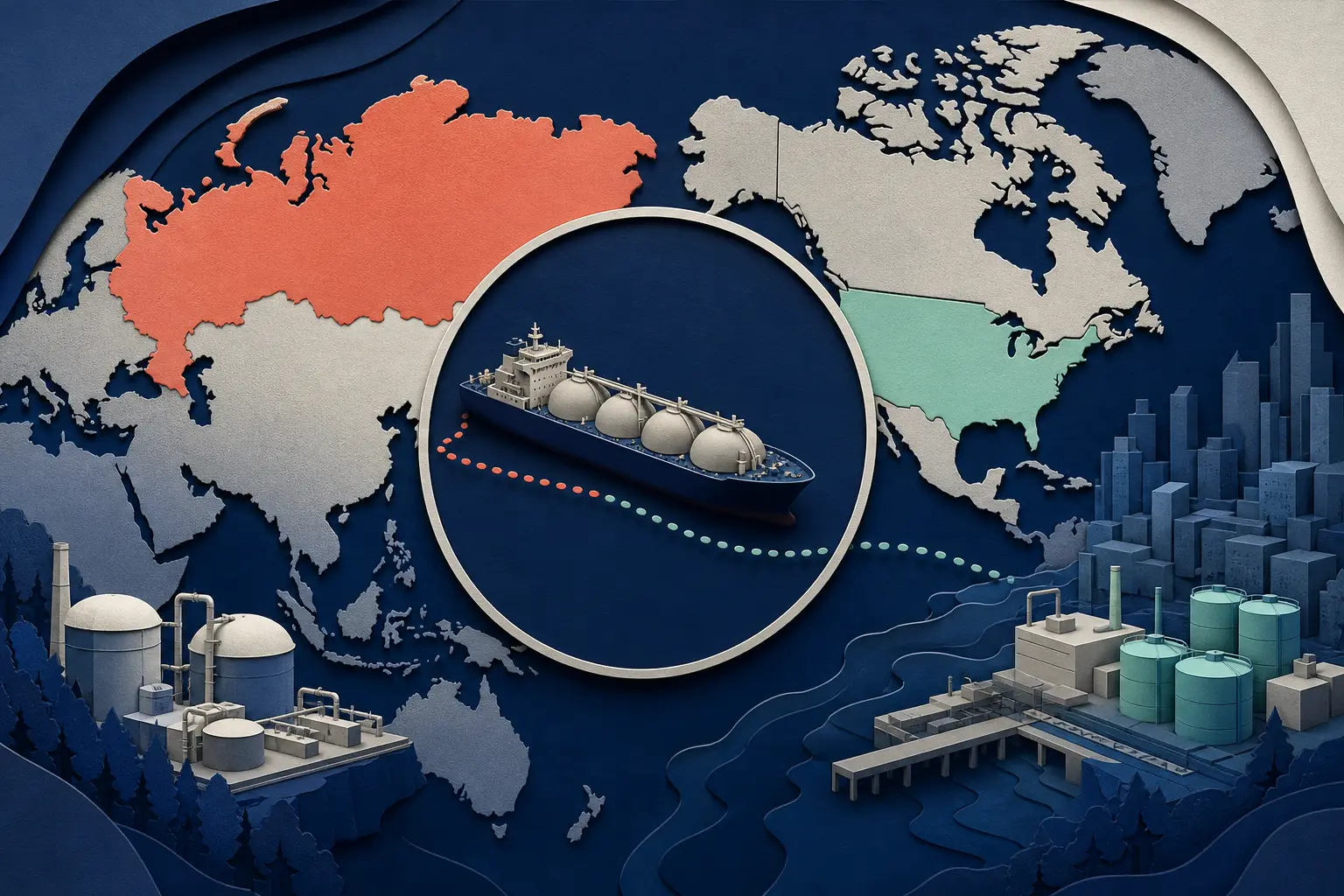
Editorial illustration for: Will the US import Russian diesel fuel by 31 December 2026?

How the contract works

A contract on this question settles at $1 if Russian diesel fuel is physically delivered to a US port or into US territory for qualifying use by 31 December 2026, 11:59 PM ET, and at $0 if it is not. The price at any moment is simply the collective estimate of how likely that delivery is โ€” a contract trading at 0.30, for example, would imply traders see roughly a three-in-ten chance of a qualifying shipment arriving in time, not that anyone has guaranteed it. Settlement will be based on US Treasury OFAC announcements and corroborating reporting from outlets such as Reuters or Bloomberg describing shipments made under General License 135. A position in this contract can generally be sold before the resolution date at whatever price the market is then quoting.
What the market thinks happens
$100
Yes62%

The event happens

Costs now
$0.62
If you put in $100
$161
No38%

The event does not happen

Costs now
$0.38
If you put in $100
$263

Probability

History starts collecting once the event is tracked

How the price has moved

The only pricing data available comes from a single venue, Polymarket, where the contract has traded $77,404 in volume and currently reflects a 65% implied probability. Because this is the sole venue tracked, there is no cross-venue spread to compare, and no day-over-day or week-over-week move has been reported that can be tied to a specific event. That leaves the clearest honest reading as this: a moderately traded, one-venue market pricing the outcome as more likely than not, without a documented catalyst for any recent shift.

Analysis

Context

On 9 October 2026, President Trump announced an energy arrangement with President Putin that would allow limited Russian diesel fuel into the United States, a sharp reversal from the ban on Russian oil, gas and coal imports that Washington imposed in March 2022. The US Treasury's Office of Foreign Assets Control followed with General License 135, which carves out specific, authorized transactions from the broader sanctions regime still covering most Russian energy trade. This is the first mechanism since 2022 that would let Russian-origin fuel land commercially on US soil. The question is narrow and physical: does a cargo of Russian-produced diesel actually reach a US port or US territory for commercial or government use before the end of 2026. Fuel used to power a ship's own engines, cargo held in bond for re-export, or diesel merely transiting through the US to another destination does not count. A related market asks the identical question with an earlier deadline, 30 November 2026, which gives traders a second data point on how quickly the market expects the first shipment to materialize.
The consensus figure across tracked venues sits at 65%, built entirely on Polymarket activity with $77,404 in trading volume. That is a meaningful amount of interest for a single-venue, single-outcome geopolitical contract, but it is still modest next to major election or Fed-decision markets, which means the price can move noticeably on a single credible report rather than a broad shift in trader sentiment. With only one venue currently pricing this question, there is no cross-venue spread to read for disagreement โ€” the number represents one pool of traders, not a consensus built from divergent sources. The case for a delivery happening rests on the legal and political mechanics already in place. OFAC's General License 135 did the hard regulatory work of authorizing the transaction type; what remains is commercial execution โ€” a seller, a buyer, a tanker, and a port. Both Washington and Moscow have political incentives to show the arrangement is real rather than symbolic, and shipping time from Baltic or Black Sea loading points to the US East Coast is roughly three to four weeks, which comfortably fits inside the window if a cargo were already moving. The case against hinges on friction below the headline announcement. US refiners and fuel traders face reputational exposure even with a legal carve-out, because European and UK sanctions regimes on Russian energy remain largely intact, and any US buyer dealing in Russian product risks complications with insurers, shipping classification societies, and counterparties operating under those other regimes. The settlement rule's exclusions โ€” no bunker fuel, no in-bond re-export, no transit cargo โ€” also narrow what counts, making it easier for the question to resolve no on a technicality even if Russian-origin fuel appears somewhere in US waters. The existence of a parallel market with a 30 November 2026 deadline is itself informative. If that earlier contract is priced meaningfully lower than this one, it signals traders expect any shipment, if it happens at all, to land in December rather than November โ€” consistent with the lead time needed to arrange a first cargo under a license barely three weeks old at the time of writing.

What moves the probability

  1. General License 135 scope

    The license defines exactly which transactions are authorized; any ambiguity in its text about product grades, intermediaries or payment channels could slow the first shipment. This is the single biggest enabling factor and pushes the probability up relative to where it would sit without any legal carve-out.

  2. Shipping and insurance logistics

    A tanker carrying Russian diesel needs flagging, insurance and port clearance that many underwriters remain cautious about given overlapping EU and UK sanctions. Delays here are the most likely reason the window closes without a qualifying delivery.

  3. Corporate risk appetite

    US refiners and fuel importers may hesitate to be the first named buyer of Russian diesel even where it is legal, given reputational and political exposure. This factor weighs against a fast resolution regardless of the license's legal clarity.

  4. Two-month settlement window

    With resolution at 31 December 2026, 11:59 PM ET, there is limited time for a full commercial cycle โ€” negotiation, loading, transit, customs clearance โ€” to complete. A narrow window mechanically caps how much certainty the market can have this early.

  5. Political durability of the deal

    The arrangement stems from a single bilateral announcement on 9 October 2026 and could face pushback from Congress or allied governments. Any sign of reversal or legal challenge would pull the probability down quickly.

The case for

  • OFAC has already issued General License 135, removing the main legal obstacle to a qualifying shipment.
  • Both the Trump and Putin governments have a political incentive to demonstrate the arrangement produces visible results before year-end.
  • Shipping time from Russian export terminals to US ports is roughly three to four weeks, which fits inside the window if a cargo is already contracted.
  • A related market with a 30 November 2026 deadline gives an early read on whether traders expect the first shipment in November or closer to the December cutoff.

The case against

  • No physical delivery of Russian diesel to a US port has been publicly confirmed as of 30 October 2026.
  • US buyers and insurers may avoid the trade despite its legality because overlapping EU and UK sanctions on Russian energy remain in force.
  • The settlement rule excludes bunker fuel, in-bond cargo and transit shipments, narrowing what actually counts as a qualifying delivery.
  • A newly issued license with no established commercial precedent could take longer than two months to translate into an actual cargo movement.

What to watch

The clearest signal would be a US Treasury OFAC announcement or a Reuters or Bloomberg report naming a specific vessel, cargo and US port tied to General License 135. Tanker-tracking data showing a Russian-origin diesel cargo departing Baltic or Black Sea terminals bound for US waters would be an early indicator well before arrival. The 30 November 2026 deadline on the related market is also worth watching, since its resolution, due before this contract settles, will show whether the first shipment arrived within six weeks of the license's issuance or took longer.

Trade this contract

Venues (1)

Open on PolymarketYes 0.62
  • gas covered
  • no trading fee

More about this event

Venues (1)

Probability

  • US imports Russian diesel by December 31?62%
  • US imports Russian diesel by November 30?47%

Resolution rules

Determined by
US Treasury OFAC announcements and credible reporting (e.g. Reuters, Bloomberg) on shipments under General License 135
Resolution date

This contract resolves yes if diesel fuel of Russian production origin is physically delivered to a US port or into US territory for commercial or government use under the General License 135 framework, by 31 December 2026 at 11:59 PM ET. The determination relies on US Treasury OFAC announcements and credible reporting from outlets such as Reuters or Bloomberg describing the shipment. Fuel used solely to power a vessel, held in bond for re-export, or in transit to a third country does not count toward a yes resolution.

Calculation methodology โ†’

Local context

This market is a direct test of whether Trump's sanctions carve-out with Putin produces real trade rather than just a diplomatic announcement, a reversal of a policy Washington has held since the invasion of Ukraine in 2022. For readers who follow US energy markets, a confirmed Russian diesel delivery would be a new data point in US distillate supply, relevant to fuel costs for US truckers, farmers and heating-oil households during the winter months. For readers following US-Russia relations more broadly, the outcome is a concrete marker of how far the October 2026 agreement extends beyond rhetoric into enforceable commercial activity.

Common questions

What exactly needs to happen for this to resolve yes?
Diesel fuel produced in Russia must be physically delivered to a US port or into US territory for commercial or government use, under the General License 135 framework, by 31 December 2026 at 11:59 PM ET. Fuel used only to power a ship, held in bond for re-export, or merely in transit to another country does not qualify.
Who decides whether this resolves yes or no?
Resolution depends on US Treasury OFAC announcements together with credible reporting from outlets such as Reuters or Bloomberg confirming a qualifying shipment under General License 135. Without a public announcement or report, the market is likely to wait rather than resolve on rumor.
What does the current price actually mean?
The price is the market's running estimate of the probability a qualifying shipment arrives in time, not a guarantee of any outcome. It moves as new information appears and can be sold before the 31 December 2026 settlement date at whatever price is quoted then.
What happens if a shipment is announced but disputed or delayed past the deadline?
If a cargo is loaded or in transit but has not physically arrived and been confirmed by 31 December 2026, 11:59 PM ET, the contract resolves no regardless of how close the shipment came. Resolution depends on confirmed physical delivery within the stated window, not on an announcement of intent.
Why is diesel the fuel named in this agreement rather than crude oil or gas?
The announcement and the OFAC license specifically authorize diesel fuel transactions, reflecting that US distillate markets have faced tighter supply than crude markets in recent years. Crude oil and natural gas remain under the broader 2022 sanctions regime and are not covered by this particular carve-out.
How does this market differ from the related one with a 30 November 2026 deadline?
Both ask the identical question about a qualifying Russian diesel delivery, but one resolves a month earlier, on 30 November 2026, while this one allows until 31 December 2026. Comparing their prices gives an indication of whether traders expect the first shipment, if it happens, to arrive in November or closer to year-end.

Related events