Menu
World

Will shipping traffic through the Strait of Hormuz return to normal levels before 1 October 2026?

Resolution: Updated:
13%

market consensus

chance the market gives this event — not your chance of being right

YesThe event happens
13%
NoThe event does not happen
87%

Trade this contract

Open Kalshi siteYes 0.13
  • No external wallet needed
  • gas covered
Buy the opposite sideNo 0.88

In short

The market treats a return to normal Hormuz traffic before 1 October 2026 as unlikely. The price collapsed from the high 80s down to the low teens within a single day of trading, which tells you the early quotes reflected thin, untested trading rather than a settled view. A ceasefire or de-escalation announcement involving Iran, paired with shipping insurers cutting war-risk premiums, is what would push this back up.

How the contract works

This market settles Yes if the IMF PortWatch seven-day moving average of transit calls through the Strait of Hormuz reaches or exceeds 60 on any single day before 1 October 2026, and No otherwise. A contract pays $1 if that threshold is hit in time and nothing if it is not; a price of 0.30, for example, would mean the market sees roughly a three-in-ten chance of the threshold being reached before the deadline, not that the outcome is three-tenths likely to happen exactly on that scale in any stricter sense. Data revisions that IMF PortWatch publishes on or before 30 September 2026 count toward settlement; anything revised after that date does not. Positions in this contract can typically be sold before 1 October 2026 at whatever price the market is quoting at the time, rather than held to settlement.
What the market thinks happens
$100
Yes13%

The event happens

Costs now
$0.13
If you put in $100
$769
No87%

The event does not happen

Costs now
$0.87
If you put in $100
$115
0%25%50%75%100%12:0017:3623:1204:4810:2416:00
ConsensusKalshi

How the price has moved

The contract opened on 29 July 2026 at 80% and briefly traded as high as 88% before falling sharply to around 13%, a move of roughly 70 percentage points inside a single day of trading. That kind of swing, on a market with only 58 recorded observations and volume concentrated on one venue, points to an early price built on thin trading being overwritten once larger positions came in. The last 24 hours show a small 1.0 percentage point rise, a modest stabilization rather than a reversal of the broader drop. The scale of the initial move follows no single publicly reported trigger in the facts available here, but the direction — from a market initially pricing normal traffic as likely to one pricing it as unlikely — is consistent with a reassessment of how quickly Hormuz shipping recovers from elevated tension.

Context

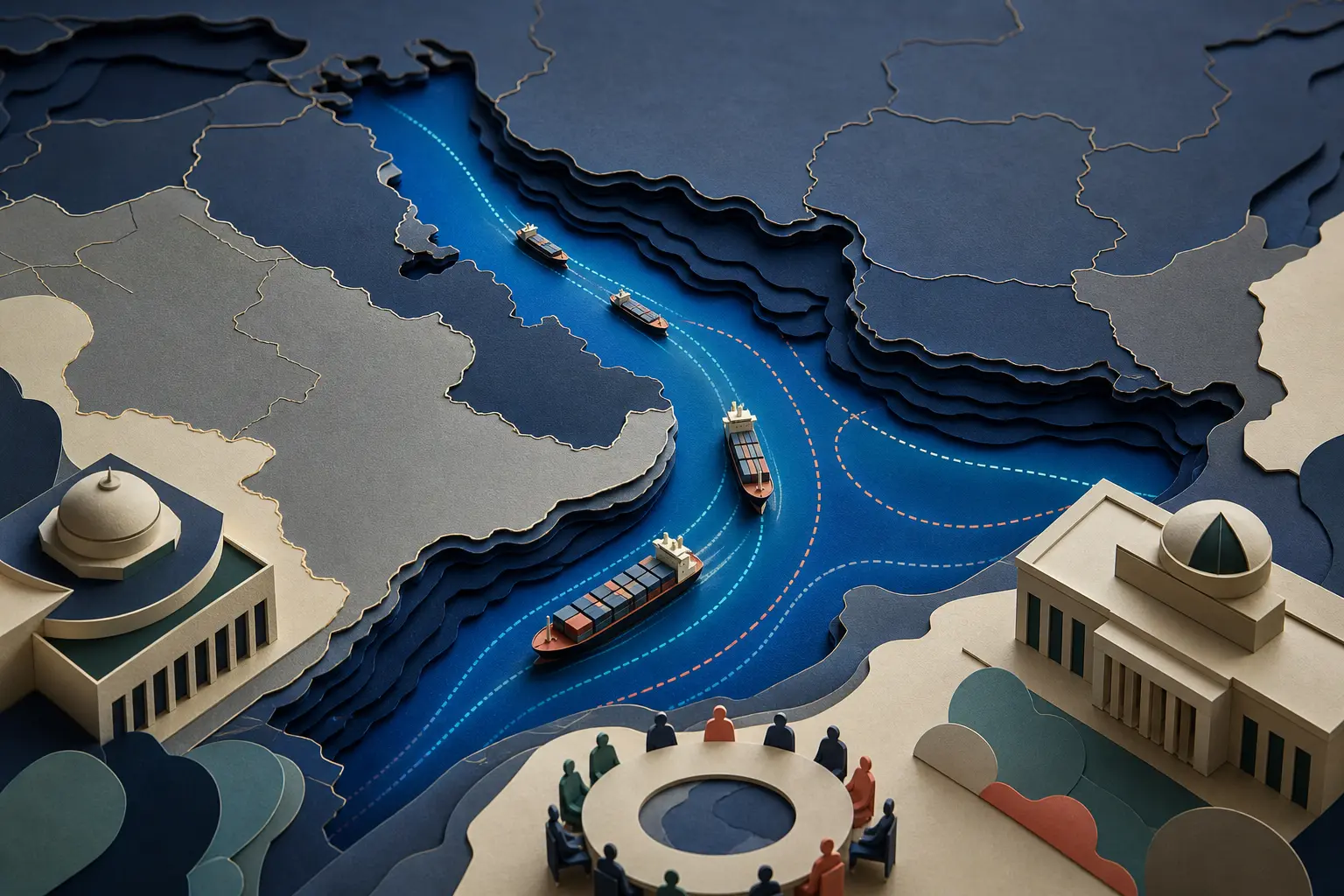
The Strait of Hormuz is the 33-kilometre chokepoint between Iran and Oman through which roughly a fifth of the world's seaborne oil and a large share of global liquefied natural gas pass. Iran has repeatedly threatened to close or restrict the strait during periods of confrontation with Israel and the United States, and shipping companies and insurers respond to those threats well before any physical blockage occurs, by rerouting, slowing transits, or demanding higher war-risk premiums. The IMF's PortWatch project tracks this in near real time using ship-tracking data, publishing a daily count of transit calls — arrivals of container ships, tankers, dry bulk carriers, roll-on/roll-off vessels and general cargo ships — that gives a direct, verifiable read on whether traffic has actually slowed or is running at its usual pace.

Analysis

The headline number here is the size of the move, not just its direction. This contract was first recorded on 29 July 2026 at 80%, traded as high as 88% in its earliest hours, and has since fallen to around 13% — a swing of roughly 70 percentage points inside a single day. With only 58 price observations logged so far and total volume of $1,329,435 concentrated on one venue, Kalshi, this pattern is consistent with a market that opened on light, exploratory trading before real positioning arrived and repriced it sharply lower. The last 24 hours show a small uptick of 1.0 percentage point, suggesting the market has now found something closer to a working level rather than continuing its earlier freefall. A single-venue market with this volume and history is still young; the price can be sensitive to a handful of large trades rather than a broad consensus. The core judgment embedded in a 13% price is that the 60-transit-call threshold is a high bar relative to where traffic has been running, and that the roughly two months remaining before the 1 October 2026 deadline is not much time for a de-escalation, if one happens, to feed through into ships actually resuming normal transit schedules. Shipping companies and their insurers tend to move cautiously: once war-risk premiums rise and routing decisions are made, they are not reversed on the basis of a single diplomatic statement, but only after a sustained period without incidents. The market's low price reflects that lag as much as it reflects the underlying military and diplomatic situation in the Gulf.

What moves the probability

  • placeholder

    p

  • Iran-Israel-US tension trajectory

    Any escalation in the confrontation involving Iran, Israel and the United States pushes the probability of normal traffic lower, because Iran has used threats against Hormuz as leverage in past crises. A durable ceasefire or de-escalation, by contrast, is the single event most likely to move this market back toward Yes, though the effect would take time to show up in actual transit counts.

  • Shipping insurance and war-risk premiums

    Lloyd's-linked war-risk premiums and marine insurers' willingness to cover Hormuz transits directly shape whether shipping lines resume normal schedules. Elevated premiums, which typically lag behind the underlying security situation, keep transit counts below the 60-call threshold even after tensions ease.

  • US and allied naval posture

    Escort operations, minesweeping activity, or a reduced US and allied naval presence in the Gulf change the calculus for commercial operators. A visible increase in naval protection could encourage a faster return to normal traffic; a drawdown would work against it.

  • IMF PortWatch data mechanics

    Because the resolution depends on a seven-day moving average crossing 60, a short spike in traffic will not settle the market on its own; the average has to sustain the level for the threshold to register, and revisions published after 30 September 2026 do not count.

  • Time remaining before 1 October 2026

    With roughly two months left, there is limited runway for a diplomatic resolution to translate into rerouted ships resuming their old schedules, which is one reason the market sits well below even odds.

The case for

  • A ceasefire or de-escalation agreement involving Iran, Israel and the United States is reached and holds through at least September 2026.
  • Marine insurers lower Hormuz war-risk premiums quickly enough for shipping lines to resume normal scheduling before the 1 October deadline.
  • The IMF PortWatch seven-day moving average of transit calls sustains a reading of 60 or above on at least one day before 30 September 2026.
  • No new incident, such as an attack on a vessel or a mining event, resets the de-escalation process in the coming weeks.

The case against

  • Tensions between Iran and Israel, or Iran and the United States, remain unresolved or escalate further before 1 October 2026.
  • Shipping companies and insurers keep war-risk premiums elevated even after any diplomatic progress, given how cautiously those markets typically move.
  • The two months remaining are not enough time for a resumption of normal shipping schedules to register as a sustained seven-day average of 60 or more.
  • A new incident in the Gulf, even a minor one, could delay any recovery in transit counts regardless of diplomatic developments.

Trade this contract

Venues (1)

Open Kalshi siteYes 0.13
  • No external wallet needed
  • gas covered

Venues (1)

Probability

  • Strait of Hormuz traffic returns to normal by September 30?19%
  • Before October 1, 202613%

Resolution rules

Determined by
IMF PortWatch
Resolution date

This market is determined by IMF PortWatch, which tracks daily transit calls through the Strait of Hormuz using ship-tracking data. It resolves Yes if the seven-day moving average of transit calls reaches or exceeds 60 on any single day before 1 October 2026, and No if it does not. Data revisions published by IMF PortWatch on or before 30 September 2026 count toward this determination; any revision published after that date is excluded.

Calculation methodology

Local context

A prolonged disruption to Hormuz shipping keeps upward pressure on global oil prices and marine insurance costs, both of which feed into fuel prices, freight rates and headline inflation figures in the US, UK, Canada and Australia. Central banks including the Federal Reserve watch energy price shocks closely because they complicate the inflation outlook that shapes interest rate decisions, so a sustained Hormuz disruption is one channel through which this story reaches Western consumers well beyond the shipping industry itself.

What to watch

Watch for any formal ceasefire, ceasefire violation, or renewed military incident involving Iran, Israel or the United States in the Gulf region, since these are the events most likely to move shipping company and insurer behaviour. Watch weekly IMF PortWatch updates on the seven-day moving average of Hormuz transit calls, since that is the exact metric this market settles on. Watch marine war-risk insurance pricing from major underwriters, which tends to move ahead of visible changes in ship traffic. The window closes on 30 September 2026 for data revisions and 1 October 2026 for settlement, so the closer that date gets without a sustained 60-call average, the less time remains for a Yes outcome.

Common questions

What exactly needs to happen for this market to resolve Yes?
The IMF PortWatch seven-day moving average of transit calls through the Strait of Hormuz needs to reach 60 or more on at least one day before 1 October 2026. Transit calls include container ships, tankers, dry bulk carriers, roll-on/roll-off vessels and general cargo ships.
What does the current market price actually mean?
The price reflects what traders on Kalshi are currently willing to pay for a contract that pays $1 if the threshold is reached in time and nothing if it is not. It is a running estimate of probability, not a forecast issued by any official body, and it changes as new information and trades come in.
Why did the price move so sharply right after the market opened?
The contract went from an opening level of 80% up to 88% and then down to around 13% within its first day, while total volume built to over $1.3 million. That pattern is typical of a market repricing quickly once real trading activity replaces the thin, early quotes.
What happens if IMF PortWatch data is delayed or revised?
Revisions published on or before 30 September 2026 are taken into account for settlement. Any revision published after that date, including corrections to data from within the market's window, is not considered.
Why does the Strait of Hormuz matter this much to global shipping?
Roughly a fifth of the world's seaborne oil and a significant share of global LNG pass through this one narrow chokepoint between Iran and Oman, so even a partial slowdown in transits has outsized effects on global energy and shipping markets.
Could this market settle Yes and No on different venues?
All venues listed here settle by the same IMF PortWatch data source and the same 60-transit-call threshold, so there is no discrepancy in resolution criteria across venues at this time.

Related events

13%/ 88%
Yes / No