Menu
World

Will there be a military clash between Israel and Turkey before 2027?

Resolution: Updated:

In short

The market treats a direct Israel-Turkey clash as unlikely. Both militaries operate in and around Syria and Erdogan's rhetoric toward Israel has been hostile, but neither government has shown appetite for direct fire, and deconfliction channels have so far held. A miscalculation over Syrian airspace or a naval incident near the eastern Mediterranean is the kind of event that would move this quickly.

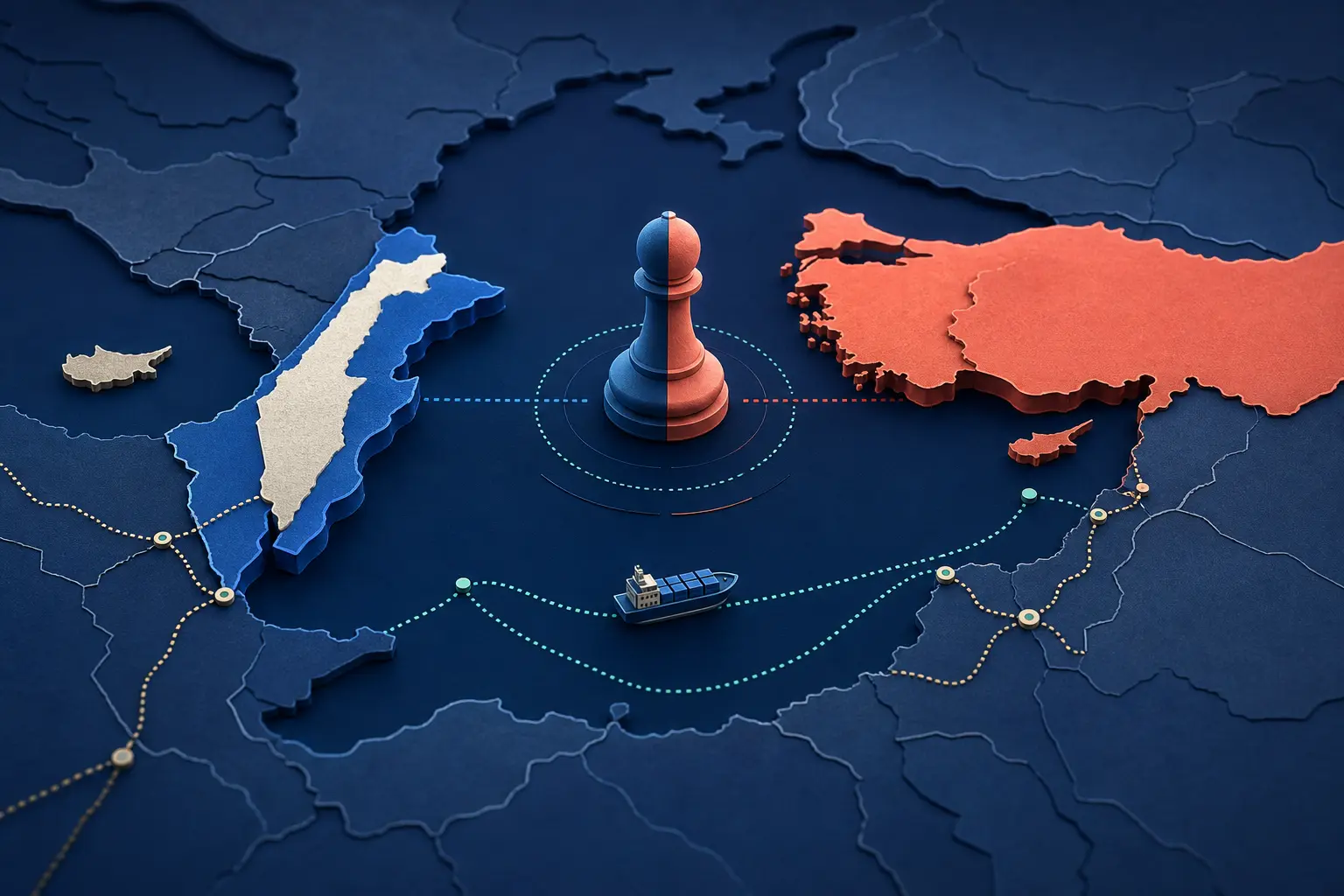
Editorial illustration for: Will there be a military clash between Israel and Turkey before 2027?

How the contract works

A contract on this question settles at $1 if Israeli and Turkish armed forces have a direct military encounter โ€” a missile strike, artillery exchange, gunfire, or an intentional ship ramming causing significant damage โ€” reported by credible news outlets before 31 December 2026, 11:59 PM ET. It settles at nothing if no such encounter is confirmed by that date. Warning shots, strikes that land in uninhabited areas, missile launches that pass through airspace or land in territorial waters, and minor ship damage do not count toward a Yes. A contract priced, hypothetically, at $0.30 would mean the market sees roughly three chances in ten of that direct encounter happening; the actual current price is shown alongside this text. Positions can typically be sold before the settlement date at whatever price the market is quoting at that time.
What the market thinks happens
$100
Yes11%

The event happens

Costs now
$0.11
If you put in $100
$909
No89%

The event does not happen

Costs now
$0.89
If you put in $100
$112

Probability

History starts collecting once the event is tracked

How the price has moved

Available data shows the contract trading almost entirely on Polymarket, where $320,947 in volume has produced a price of 11%, close to the 10% consensus across venues. There is no sharp recent move to point to in the figures available, and no single reported event this year appears to have driven a break in either direction. A price that has held in the low double digits without a spike is itself informative: it indicates the market sees the Syria overlap and the Gaza-driven rhetoric as ongoing background risk rather than an escalating one.

Analysis

Context

Turkey and Israel are both long-standing US security partners in the Middle East but have been on opposite sides of regional politics since the Gaza war began in October 2023. Ankara suspended trade with Israel in 2024 and President Erdogan has repeatedly called Israel's conduct in Gaza a crime, while Israeli officials have accused Turkey of harboring Hamas figures. Neither side has broken diplomatic relations entirely, and neither has fired on the other's forces. The more acute flashpoint is Syria. Since the fall of the Assad government in December 2024, Turkey has expanded its military footprint and political influence over the successor administration in Damascus, while Israel has carried out repeated air strikes on Syrian military infrastructure to prevent weapons and bases from falling under what it sees as hostile control. Reports emerged in 2025 of Turkish and Israeli officials holding deconfliction talks, reportedly hosted by Azerbaijan, aimed at avoiding an accidental collision between the two air forces operating in the same Syrian airspace. Both countries remain formally aligned with Washington: Turkey hosts the US Incirlik air base and is a NATO member, and Israel receives US military support. That shared alignment is itself a constraint neither government has an obvious interest in testing.
The consensus price across venues sits at 10%, with Polymarket โ€” the only venue currently quoting the contract in meaningful size โ€” pricing it at 11% on $320,947 of traded volume. That volume is modest for a geopolitical contract and concentrated on a single venue, which means the price reflects a relatively thin pool of traders rather than broad market consensus; it should be read as an informed estimate, not a settled fact. The resolution criteria are narrow by design. They require a direct military encounter with significant damage, not proxy tension, diplomatic rupture, or rhetorical escalation. That threshold matters: Turkey and Israel have sustained decades of friction, including sharp disagreements over Gaza, Syria, and Cyprus, without ever crossing into direct fire. The market's low price reflects that historical pattern as much as it reflects the current moment. The most plausible path to a Yes runs through Syria, where Turkish-backed forces and Israeli air operations now share the same theater. Israel has struck Syrian military sites repeatedly since Assad's fall in December 2024 to deny advanced weapons to the new government's forces, some of which operate close to Turkish military planners. Reports of deconfliction talks, reportedly brokered with Azerbaijan's involvement in 2025, suggest both sides recognize the collision risk and have taken steps to manage it rather than let it escalate. That kind of active de-escalation machinery is itself a reason the price sits in the low double digits rather than higher. A secondary channel is naval. Turkey has periodically sailed vessels near the eastern Mediterranean in solidarity actions tied to Gaza, and Israel maintains a naval presence around its blockade. Neither side has intercepted the other's ships to date, but this is the kind of lower-profile incident that could occur with less warning than an air-to-air encounter in Syria.

What moves the probability

  1. Overlapping presence in Syria

    Turkish-backed forces and Israeli air operations both now operate inside post-Assad Syria, raising the chance of an accidental encounter. This is the single largest upward pressure on the probability, though it has not yet produced a direct incident.

  2. Deconfliction diplomacy

    Reported 2025 talks, said to involve Azerbaijan as an intermediary, aimed to keep Turkish and Israeli forces from colliding over Syrian airspace. Active deconfliction machinery is a meaningful downward pressure on the odds of an accidental clash escalating.

  3. Erdogan's rhetoric versus restraint

    Turkey suspended trade with Israel in 2024 and Erdogan has used harsh language over Gaza, but none of it has translated into military action against Israeli forces. Rhetoric without a shift in military posture keeps the price low.

  4. Shared US alignment

    Turkey is a NATO member hosting US forces at Incirlik, and Israel is a core US security partner; a direct clash between the two would force an unusually difficult choice on Washington. That shared dependency discourages either government from escalating to fire.

  5. Narrow settlement bar

    The contract excludes warning shots, strikes into empty areas, and minor ship damage, requiring a clear, significant, direct encounter. This raises the bar for a Yes considerably above what ordinary friction would produce.

The case for

  • Israeli strikes on Syrian military sites would have to hit personnel or assets directly tied to Turkish forces or advisers operating in the same area.
  • Deconfliction talks reported in 2025 would have to break down, removing the current channel used to avoid accidental air encounters over Syria.
  • A Turkish naval vessel would have to be intercepted or fired on by Israeli forces near the Gaza blockade or in a disputed eastern Mediterranean zone, causing significant damage.
  • Any of these would need to happen and be confirmed by credible reporting before 31 December 2026, 11:59 PM ET.

The case against

  • Turkey and Israel have never exchanged direct fire despite decades of political rivalry, including the 2010 Mavi Marmara incident, which did not involve state armed forces firing on each other.
  • Reported deconfliction talks in 2025 suggest both governments are actively managing the Syria overlap rather than allowing it to drift toward confrontation.
  • Turkey's response to the Gaza war has been diplomatic and economic โ€” suspending trade in 2024 โ€” rather than military, indicating a preference for pressure short of force.
  • The settlement criteria exclude warning shots, near-misses, and minor damage, so most plausible friction incidents would not even qualify as a Yes.

What to watch

Key signals between now and 31 December 2026 include any reported Turkish military construction or basing activity inside Syria, further Israeli strikes on Syrian sites near Turkish-linked forces, the status of any Gaza ceasefire (which shapes the intensity of Erdogan's rhetoric), and any reports of renewed or collapsed deconfliction talks between Ankara and Jerusalem. A single confirmed naval or air incident involving both countries' forces would move the price immediately regardless of how it is later characterized.

Trade this contract

Venues (1)

Open on PolymarketYes 0.11
  • gas covered
  • no trading fee

More about this event

Venues (1)

Resolution rules

Determined by
Consensus of credible news reporting
Resolution date

Resolution follows a consensus of credible news reporting confirming a direct military encounter between Israeli and Turkish armed forces โ€” missile strikes, artillery fire, gunfire exchange, or intentional ship ramming causing significant damage โ€” occurring by 31 December 2026, 11:59 PM ET. Warning shots, strikes into uninhabited areas, missile launches passing through airspace or landing in territorial waters, and minor ship damage are explicitly excluded from a Yes outcome.

Calculation methodology โ†’

Local context

Turkey and Israel are both central US security partners, and Turkey's NATO membership means a direct clash would test alliance cohesion in a way few other bilateral disputes could. The US operates from Incirlik air base in Turkey and maintains close military ties with Israel, so any escalation would put Washington in the position of managing two allies in direct conflict rather than a conflict involving one ally and an adversary. For readers following broader Middle East risk, this is one of the few scenarios that would directly complicate US regional strategy rather than simply raise energy or currency volatility.

Common questions

What exactly needs to happen for this to resolve Yes?
A direct military encounter between Israeli and Turkish armed forces โ€” a missile strike, artillery fire, gunfire exchange, or intentional ship ramming causing significant damage โ€” confirmed by credible news reporting before 31 December 2026, 11:59 PM ET. Diplomatic rupture, proxy conflict, or rhetorical escalation alone does not qualify.
What does the current price actually mean?
The price is the market's estimate, expressed as a probability, of a direct encounter happening before the deadline. It is not a prediction from any single analyst or institution, but the aggregate of what traders are currently willing to pay for a contract that pays $1 if it happens.
What happens if there's an ambiguous incident, like a near-miss or warning shots?
The rules explicitly exclude warning shots, strikes into uninhabited areas, missile launches passing through airspace or landing in territorial waters, and minor ship damage. Resolution depends on consensus among credible news outlets that a direct, significant encounter occurred, so ambiguous incidents would likely resolve No unless reporting converges on a clear direct clash.
Why is Syria considered the most likely flashpoint rather than Gaza or Cyprus?
Turkish-backed forces and Israeli air operations are both active inside Syria following the fall of the Assad government in December 2024, putting the two militaries in closer physical proximity than anywhere else in the region. Reported 2025 deconfliction talks between the two countries were specifically aimed at managing this Syrian airspace overlap.
Has anything like this happened before between Turkey and Israel?
The two countries have had serious diplomatic and economic ruptures, including the 2010 Mavi Marmara flotilla incident and the 2024 trade suspension, but neither involved their armed forces exchanging fire. The absence of any prior direct military encounter is part of why the market prices this outcome as unlikely.
Can a position in this contract be closed before the resolution date?
Yes, contracts can generally be sold on the venue where they were bought at whatever price the market is quoting at that time, without waiting for the 31 December 2026 settlement date.

Related events