Menu
World

Will China blockade Taiwan in 2026?

Resolution: Updated:

In short

The market treats a China blockade of Taiwan in 2026 as unlikely. The main reason is the high bar for resolution: past pressure campaigns, including large-scale drills in August 2022 and the 2023 and 2024 'Joint Sword' exercises, simulated an encirclement but never actually stopped foreign shipping or flights for 24 hours. That would change if a PLA exercise crossed from simulation into enforced denial of access, or if a political trigger โ€” a formal independence move by Taipei, a major US arms sale, or a shift in Beijing's calculus around Taiwan's next elections in 2028 โ€” raised the temperature sharply.

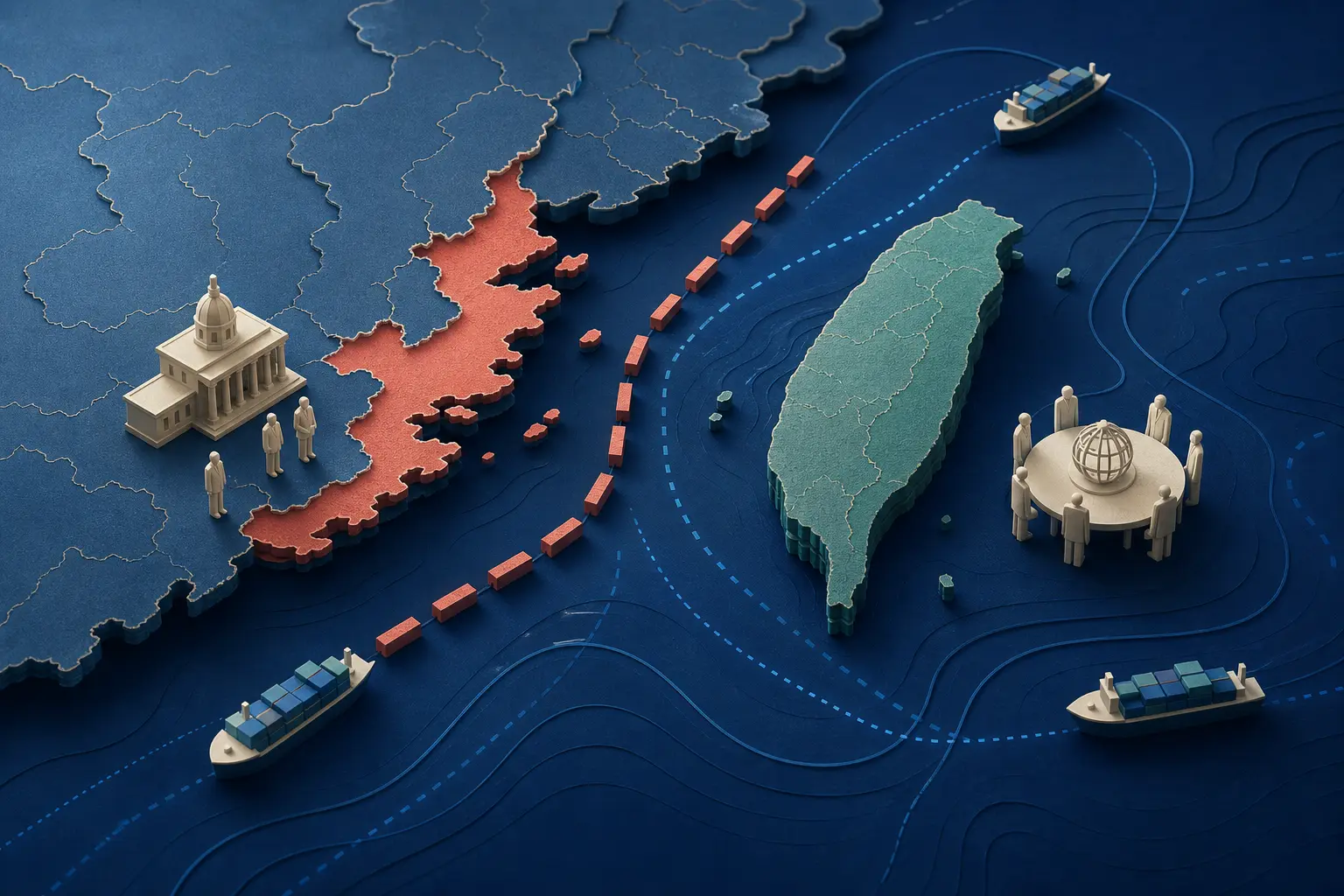
Editorial illustration for: Will China blockade Taiwan in 2026?

How the contract works

A contract on this question settles at $1 if China announces or actually enforces a blockade of Taiwan's main island โ€” stopping normal foreign commercial ship or air traffic for at least 24 hours โ€” by 31 December 2026, 11:59 PM ET. It settles at nothing if that does not happen. The price at any moment reflects what buyers and sellers currently think the chance is: a contract trading at 0.30, for example, would imply the market sees roughly a three-in-ten chance, not that the event is confirmed or ruled out. Positions can typically be sold before the 31 December 2026 deadline at whatever price the market has moved to by then.
What the market thinks happens
$100
Yes7%

The event happens

Costs now
$0.07
If you put in $100
$1,429
No93%

The event does not happen

Costs now
$0.93
If you put in $100
$108

Probability

History starts collecting once the event is tracked

How the price has moved

The available data shows a consensus of 7% concentrated on a single venue, Polymarket, with $320,804 in total volume. No day-over-day or week-over-week move figures are available for this market, and no second venue exists to check the price against, so it is not possible to say whether the figure has been drifting or holding steady over recent weeks. What can be said is that a single-digit price on modest but sustained volume is consistent with a market that views this as a real but distant risk rather than a live crisis.

Analysis

Context

Taiwan is governed separately from mainland China but claimed by Beijing as part of its territory. Since Nancy Pelosi's visit to Taipei in August 2022, the People's Liberation Army has repeatedly staged large exercises around the island, including live-fire drills and simulated encirclements named 'Joint Sword' in 2023 and 2024. These exercises have used warning zones and no-fly notices, but foreign commercial ships and aircraft have continued reaching Taiwan's ports and airports throughout. Taiwan's president since May 2024, Lai Ching-te of the Democratic Progressive Party, has drawn sharper rhetoric from Beijing than his predecessor, but there is no Taiwan presidential or legislative election scheduled in 2026 โ€” the next is in 2028 โ€” removing one common trigger for escalation. Washington maintains a policy of strategic ambiguity but continues periodic arms sales to Taipei, which China treats as provocations and often answers with further drills. The market resolves this question against a specific and demanding standard: an actual, confirmed interruption of normal commercial traffic to Taiwan's main ports or airports for at least 24 hours, verified by credible reporting or documented navigation and airspace prohibitions. A drill with a warning area that ships and planes simply route around does not count.
The consensus price across tracked venues sits at 7%, with all $320,804 in recorded trading volume concentrated on a single venue, Polymarket. That concentration matters: with no second venue to compare against, there is no spread to read for disagreement, and the number reflects the views of whoever has been active in this one market rather than a broader cross-venue consensus. A volume figure just above $320,000 for a tail-risk geopolitical question over several months is modest โ€” enough to suggest sustained but not intense interest, consistent with a scenario participants see as a real but distant risk rather than an unfolding crisis. The 7% figure has to be read against the specific bar set by the resolution rules. China has run large-scale military exercises around Taiwan at least three times since August 2022 โ€” after the Pelosi visit, and again in the 2023 and 2024 'Joint Sword' drills โ€” and in each case foreign commercial shipping and flights continued reaching Taiwan's ports and airports. None of those episodes met the 24-hour enforced-denial threshold this contract requires. That track record of drills stopping short of an actual blockade is the strongest reason the market prices this low: the precedent is repeated pressure without execution. What could move the price is a change in either the political calendar or Beijing's calculation of cost. Taiwan has no national election in 2026, removing a common flashpoint; the next presidential and legislative races are in 2028. A blockade would also carry heavy costs for China itself, disrupting its own trade routes and inviting the kind of coordinated response โ€” sanctions, accelerated US and allied naval deployments โ€” that Beijing has so far avoided provoking. Absent a specific trigger, such as a formal Taiwanese move toward de jure independence or a major escalation in US arms transfers, the conditions that have kept prior drills short of a blockade look likely to hold through the remainder of 2026.

What moves the probability

  1. High resolution bar

    The contract requires an actual 24-hour denial of commercial access, not a drill or warning zone. Every PLA exercise since 2022 has fallen short of this bar, which anchors the price low.

  2. No Taiwan election in 2026

    Taiwan's next presidential and legislative elections are in 2028, removing a common historical trigger for cross-strait escalation. This reduces the chance of a sudden political flashpoint this year.

  3. Economic cost to China

    A real blockade would disrupt China's own trade routes and invite a coordinated response from the US and allies. This cost weighs against escalation and pushes the probability down.

  4. US arms sales and statements

    Periodic US arms transfers to Taiwan or stronger statements from Taipei on sovereignty are the most likely near-term flashpoints. Any of these could push the price up sharply if Beijing responds with an unusually large exercise.

  5. Single-venue pricing

    All recorded volume sits on one venue, so the 7% figure reflects a narrower pool of participants than a cross-venue consensus would. This makes the price more sensitive to individual large trades.

The case for

  • Beijing would need to convert an existing exercise, such as a future 'Joint Sword'-style drill, into an actual enforced denial of commercial shipping or flights lasting 24 hours or more.
  • A formal move by Taipei toward de jure independence, or a major escalation in US arms sales or official contact with Taiwan, would need to occur to give Beijing a specific trigger.
  • Credible outlets such as Reuters, AP or Bloomberg would need to report a wide consensus that normal ingress and egress to Taiwan's main ports or airports had actually stopped, not merely been threatened.

The case against

  • No Taiwan election is scheduled in 2026, removing the flashpoint that historically precedes the sharpest PLA responses.
  • Every major PLA exercise since the August 2022 Pelosi visit, including the 2023 and 2024 'Joint Sword' drills, has stopped short of stopping commercial traffic for 24 hours.
  • A blockade would disrupt China's own trade and invite sanctions and accelerated US and allied naval deployments, a cost Beijing has avoided incurring so far.
  • The market consensus of 7% reflects sustained but limited trading interest, consistent with participants treating this as a low-probability tail risk rather than an unfolding event.

What to watch

Key dates ahead include China's National Day on 1 October and Taiwan's National Day on 10 October, both traditional occasions for PLA displays of force. Any new US arms sale announcement to Taiwan, a change in President Lai Ching-te's public statements on sovereignty, or a fresh large-scale PLA exercise carrying a name like 'Joint Sword' would be the most direct triggers to watch. The market will also react to any US-China summit or diplomatic exchange that touches on Taiwan policy before the 31 December 2026 settlement date.

Trade this contract

Venues (1)

Open on PolymarketYes 0.07
  • gas covered
  • no trading fee

More about this event

Venues (1)

Resolution rules

Determined by
Credible news reporting (Reuters, AP, Bloomberg) and official statements from China/Taiwan governments
Resolution date

This resolves Yes if China announces or actually enforces a naval or aerial blockade of Taiwan's main island by 31 December 2026, 11:59 PM ET, meaning normal commercial ship and aircraft traffic to Taiwan's main ports or airports is prevented by threat or use of force for at least 24 hours. It requires confirmation by a wide consensus of credible reporting, such as from Reuters, AP or Bloomberg, or documented Chinese navigation or airspace prohibitions that deny most foreign commercial access. Drills or exercises with warning areas or flight notices that do not actually stop third-country ships or aircraft do not qualify, and the contract otherwise resolves No.

Calculation methodology โ†’

Local context

A Taiwan blockade would immediately become a major US foreign-policy and military crisis, testing Washington's longstanding but deliberately ambiguous commitments to Taiwan's defense. It would also disrupt global semiconductor supply chains centered on Taiwan Semiconductor Manufacturing Company, which produces the advanced chips used in products from Nvidia processors to Apple devices, with knock-on effects for US, European and Asian tech markets. For readers outside these regions, the connection runs through the same channel: any disruption to Taiwan's chip exports would ripple into global electronics prices and supply availability well beyond the immediate region.

Common questions

What exactly settles this contract, and when?
It settles based on credible reporting from outlets such as Reuters, AP or Bloomberg, and on official statements from the Chinese and Taiwanese governments, judged against the 31 December 2026, 11:59 PM ET deadline. It resolves Yes only if China announces or actually enforces a blockade meeting the 24-hour access-denial standard; otherwise it resolves No.
What does the current price actually mean?
The price is the market's collective estimate of the probability of a blockade occurring by the deadline, not a prediction from any single analyst or institution. It moves as traders buy and sell based on new information, such as military exercises or diplomatic statements.
What happens if China runs a drill that looks like a blockade but does not stop shipping?
Under the resolution rules, a drill with warning areas or flight notices that does not actually prevent foreign commercial ships or aircraft from reaching Taiwan's main ports or airports does not qualify. This has been the pattern in every major PLA exercise since 2022.
How is this different from the 2022 exercises after the Pelosi visit?
Those exercises, and the 2023 and 2024 'Joint Sword' drills that followed, created temporary no-go zones and disrupted some flight paths, but foreign commercial traffic continued reaching Taiwan throughout. None met the sustained 24-hour denial-of-access threshold this contract requires.
Could the resolution be delayed or disputed?
The rules call for a wide consensus of credible reporting, which reduces the chance of a single ambiguous report triggering resolution on its own. If reporting is mixed or a blockade's status is unclear, resolution would likely wait for that consensus to firm up, though the settlement date itself is fixed at 31 December 2026.
Is a full invasion of Taiwan the same event as a blockade?
No. This contract concerns a blockade specifically โ€” the prevention of normal ingress and egress by threat or use of force โ€” not a full military invasion or occupation, which would be a separate and distinct scenario.

Related events