Menu
World

Will Russia invade another country besides Ukraine in 2026?

Resolution: Updated:

In short

The market treats a second Russian invasion in 2026 as unlikely. Russia's forces remain heavily committed to the war in Ukraine, and NATO's Article 5 commitment to Baltic members and Poland is the main deterrent the market is pricing against. A shift would most likely follow either a Ukraine ceasefire that frees up Russian forces, or a serious military incident inside NATO territory that goes unanswered.

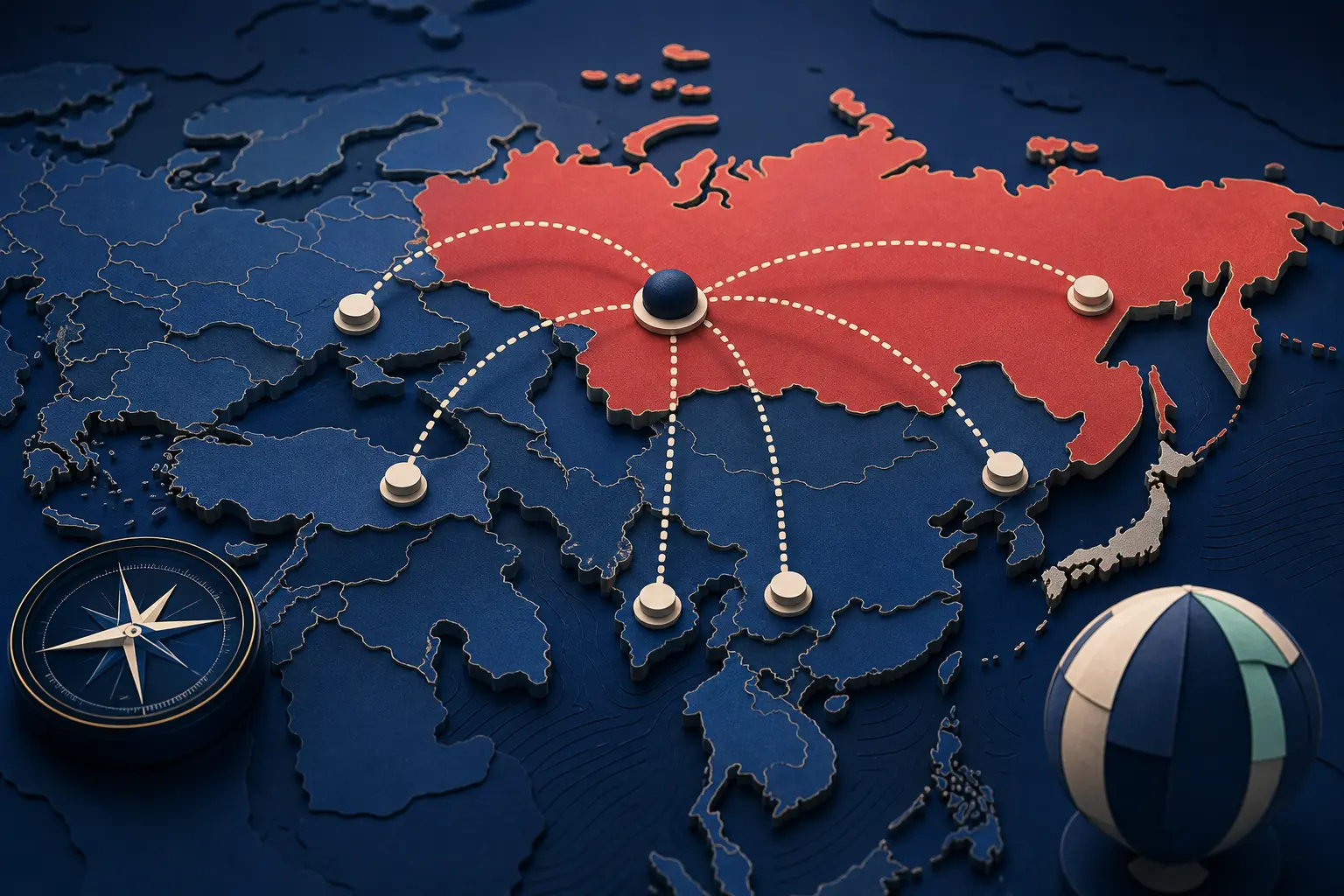
Editorial illustration for: Will Russia invade another country besides Ukraine in 2026?

How the contract works

This is a yes-or-no contract tied to a single, defined event: whether Russia commences a military offensive intended to seize territory from any UN member state other than Ukraine, by 31 December 2026, 11:59 PM ET. If that happens, the contract settles at $1. If it does not happen by that deadline, it settles at nothing. The price at any moment reflects what buyers and sellers currently think the chance is โ€” a contract trading at 0.30, for example, would imply the market sees roughly a three-in-ten chance, though that is a hypothetical, not this market's actual level. Anyone holding a position can typically sell it before the settlement date at whatever price the market has moved to by then, without waiting for the outcome to be known.
What the market thinks happens
$100
Yes7%

The event happens

Costs now
$0.07
If you put in $100
$1,429
No93%

The event does not happen

Costs now
$0.93
If you put in $100
$108

Probability

History starts collecting once the event is tracked

How the price has moved

The market opened in September 2026 and has traded at a low level since, with the consensus currently at 7% across the $452,105 in volume recorded on Polymarket, the only venue currently listing this contract. There is no second venue to compare against, so no cross-market spread is available to read for disagreement. The low, apparently stable level is consistent with a market that views a second Russian invasion in 2026 as a real but distant tail risk rather than an unfolding crisis; no single publicly reported trigger explains the current level beyond the ongoing balance between Russia's commitments in Ukraine and NATO's deterrent posture on its eastern flank.

Analysis

Context

Russia has been at war in Ukraine since February 2022, and its military has absorbed heavy personnel and equipment losses over more than three years of fighting. That has raised a separate question for policymakers and markets: could Moscow open a second front against another country before the end of 2026. The countries most often named are NATO's eastern flank states โ€” Estonia, Latvia, Lithuania and Poland โ€” plus non-NATO states with unresolved territorial disputes with Russia, such as Moldova (Transnistria) and Georgia, which fought a short war with Russia in 2008. Throughout 2024 and 2025, NATO governments reported a rise in what they call hybrid activity attributed to Russia โ€” undersea cable damage in the Baltic Sea, GPS jamming near Finland and the Baltics, and airspace incursions near Poland. None of these have amounted to a conventional ground offensive, which is the specific threshold this market tracks. The contract resolves Yes only if Russia begins a military offensive aimed at taking territory from a UN member state other than Ukraine, by 31 December 2026.
The consensus across tracked venues puts this at 7%, drawn from a single active venue, Polymarket, which has traded $452,105 in volume since the market opened in September 2026. That volume is modest next to the largest geopolitical contracts on the same platforms, which tend to run into the tens of millions of dollars โ€” it suggests this question draws steady but not intense trading interest, consistent with a low-probability tail-risk event rather than a live, fast-moving crisis. Because only one venue is currently listed, there is no cross-venue spread to read for disagreement; the 7% figure is effectively the market's single best estimate rather than an average smoothing over differing views. The low level itself tracks the balance of forces. Russia's army has taken substantial losses in Ukraine since 2022, and most Western military assessments describe its ground forces as stretched, with reserves and equipment stocks depleted faster than they can be rebuilt. Opening a second offensive against a NATO member would trigger Article 5, a mutual-defense commitment the alliance has never had formally invoked by an attack on a member's territory since NATO's founding in 1949. Against a non-NATO state such as Moldova or Georgia, the military and political cost would be lower for Moscow, and those are the scenarios analysts view as marginally more plausible than a direct strike on a NATO state โ€” though still not consistent with a near-term ground offensive as of September 2026. The settlement clause matters for how this reads: land already under a UN member state's de facto control as of market creation counts as that country's sovereign territory, so an escalation confined to already-contested areas like Transnistria, if Moldova is treated as retaining sovereignty there, or further fighting inside Ukraine itself, does not resolve this market. It requires a new offensive against a different country's recognized or de facto territory. That narrows the range of qualifying events considerably, which is part of why the price sits in the single digits rather than lower still โ€” the bar is specific, but the underlying tension along Russia's borders is real and ongoing.

What moves the probability

  1. Ukraine war trajectory

    As long as Russian forces remain engaged in Ukraine, the manpower and equipment available for a second offensive elsewhere stays limited. A ceasefire or major reduction in Ukraine fighting during 2026 would free up forces and push this probability up; continued heavy fighting keeps it down.

  2. NATO Article 5 deterrence

    Any offensive against Estonia, Latvia, Lithuania or Poland would trigger NATO's collective-defense clause, which has never been formally invoked by a direct attack on a member since 1949. That deterrent is the single largest downward pressure on this price.

  3. Hybrid incidents on the eastern flank

    Reported undersea cable damage, GPS jamming and airspace incursions near the Baltics and Poland through 2024 and 2025 have not crossed into a ground offensive. Continued incidents without escalation reinforce the market's low pricing; any incident answered with force by either side would move it sharply.

  4. Non-NATO flashpoints

    Moldova's Transnistria region and Georgia carry lower deterrence costs for Moscow than a NATO state, since neither triggers Article 5. Analysts view these as the more plausible, if still unlikely, paths to a Yes resolution.

  5. Domestic Russian military capacity

    Reported personnel and equipment losses in Ukraine since 2022 constrain Russia's near-term ability to sustain a second offensive. Any reported rebuilding of reserves or new mobilization drive would be a signal the market would likely price in.

The case for

  • Russia commences an offensive against Moldova's Transnistria region or Georgia, where NATO's Article 5 deterrent does not apply, before 31 December 2026.
  • A ceasefire or substantial de-escalation in Ukraine during 2026 frees up Russian ground forces for redeployment elsewhere.
  • Reported hybrid incidents on NATO's eastern flank escalate into a direct military incursion that credible wire services describe as an offensive aimed at seizing territory.
  • Russian mobilization and equipment production outpace losses sufficiently to support a second front by the end of 2026.

The case against

  • Russia's ground forces remain committed to the war in Ukraine through 2026, leaving insufficient capacity to open a second front.
  • NATO's Article 5 commitment makes an attack on Estonia, Latvia, Lithuania or Poland a direct alliance-wide confrontation, a step with far higher costs than continued hybrid activity.
  • No conventional ground offensive against a country other than Ukraine has occurred since the market's September 2026 creation, despite years of reported hybrid incidents.
  • The settlement bar is narrow and specific โ€” a new offensive aimed at territorial control โ€” which excludes escalation confined to Ukraine or to areas already under contested de facto control.

What to watch

Watch for any change in the trajectory of the Ukraine war, including ceasefire talks or a shift in the front line, since a slowdown there would free up Russian forces. Watch NATO troop deployments and statements on the Baltic states and Poland, and any further hybrid incidents โ€” undersea cable damage, airspace incursions, GPS jamming โ€” reported by wire services near Russia's borders. Russian military exercises historically held in the autumn near Belarus and the Baltic region, and any reported mobilization or equipment production data out of Russia, are also relevant signals between now and the 31 December 2026 settlement date.

Trade this contract

Venues (1)

Open on PolymarketYes 0.07
  • gas covered
  • no trading fee

More about this event

Venues (1)

Resolution rules

Determined by
Consensus of credible news reporting (e.g. Reuters, AP, major wire services)
Resolution date

This resolves Yes if credible wire-service reporting, such as Reuters or AP, establishes that Russia has commenced a military offensive intended to establish control over any portion of a UN member state's territory other than Ukraine's, by 31 December 2026, 11:59 PM ET. Territory already under a UN member state's de facto control as of the market's September 2026 creation counts as that state's sovereign territory for this purpose. Absent such reporting by the deadline, it resolves No.

Calculation methodology โ†’

Local context

NATO members Estonia, Latvia, Lithuania and Poland are the countries most frequently named as potential targets in this scenario, which makes it a direct security question for the Western alliance system that underpins US, UK and European defense commitments. A move in this market away from its current low level would likely coincide with broader market reactions in European currencies, defense stocks and energy prices, given the region's exposure to Russian gas transit routes and its proximity to the conflict.

Common questions

What exactly settles this market and when
It settles based on a consensus of credible wire-service reporting โ€” Reuters, AP and similar outlets โ€” on whether Russia has commenced a military offensive intended to seize territory from a UN member state other than Ukraine, by 31 December 2026, 11:59 PM ET.
What does the current price actually mean
The price reflects what traders currently think the chance is, expressed as a probability between 0 and 100%. It moves as new information arrives and is not a prediction from any single analyst or institution.
What happens if the situation is ambiguous, such as a limited incursion or covert operation
Resolution relies on a consensus of credible reporting describing the event as a military offensive aimed at territorial control. A limited or covert action that wire services do not characterize that way would not trigger a Yes resolution under the stated rules.
Does fighting continuing inside Ukraine count
No. The market explicitly excludes Ukraine; it only resolves Yes for an offensive against a different UN member state's territory.
Why does the rule about land already under a country's control matter
The rules state that land de facto controlled by a UN member state as of market creation in September 2026 counts as that country's sovereign territory. This means an escalation confined to already-contested areas, without a new offensive elsewhere, would not resolve this market Yes.
Which countries are seen as most at risk
NATO's eastern flank states โ€” Estonia, Latvia, Lithuania and Poland โ€” are the most frequently named due to their border proximity and past incidents, while Moldova and Georgia are cited as lower-deterrent-cost alternatives given they are outside NATO's Article 5 commitment.

Related events